Blackout vs sheer curtains, which is right for your Dhaka home?
Sheer curtains soften Dhaka glare by day, blackout keeps a flat dark and private at night, and Hello Sun can hang both on one double track.
Sheer curtains soften glare and keep a room bright by day, and blackout curtains make it dark and private at night. Most Dhaka flats need both, hung on a double track so each layer draws on its own. In a bedroom start with blackout, and in a living room start with a sheer.
Dhaka sun doesn't ease off. An east or west facing flat takes hard light in the morning or late afternoon, and south rooms stay bright for most of the day. Then night comes, the lamps go on inside, and with street lights and the building next door so close, your window turns into a lit screen.
So the curtain you pick decides how the room copes with glare, privacy and heat, and whether you sleep well in it. A question we hear a lot in the studio is whether to go sheer, blackout, or both. It sounds simple. People still get it wrong.
Here is how we compare the two for Dhaka apartments and houses, and when we put both on a double track.
Sheer curtains and soft Dhaka daylight
Sheer curtains filter daylight. They take the edge off glare and the room stays bright. During the day, when it is brighter outside than in, people on the street or in the next building can't see much through them. We hang them most in living and dining rooms, and anywhere you still want to see the sky.

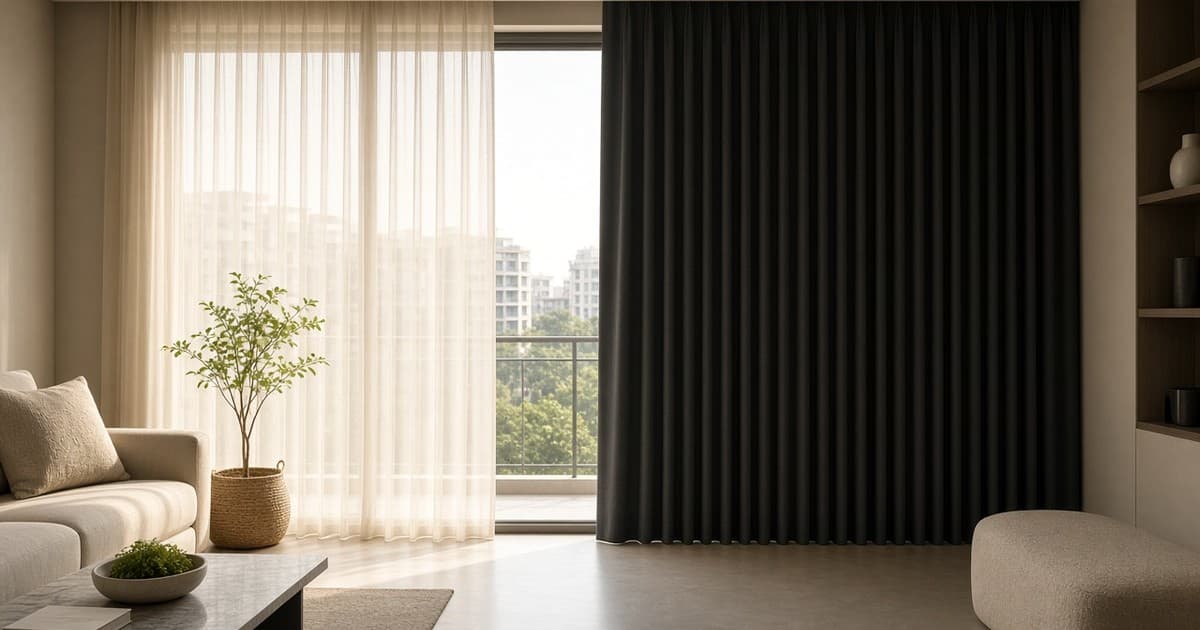
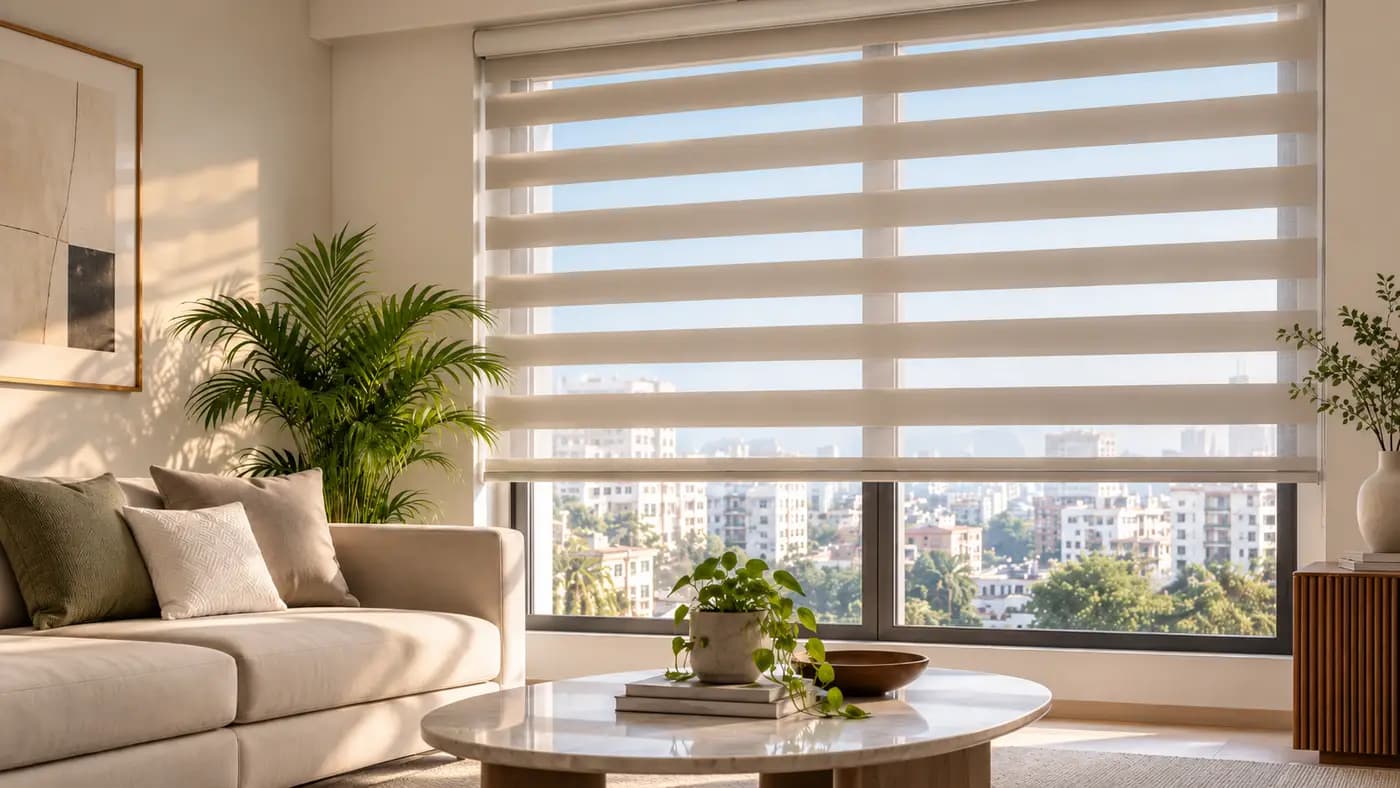
A white sheer drawn across a sunlit living-room window.
In Bangladesh humidity a light sheer breathes well and is easy to live with by day. Fabric and weave still matter, so your consultant will put a few in your hands at the studio before you choose.
Where sheers fall short is after dark: with the lights on inside, a sheer on its own gives you very little privacy. That is why we so often pair it with a lined or blackout layer for the evening.
Blackout curtains for sleep and dark rooms
Blackout curtains keep a room much darker than ordinary drapery. The weave is tight or the fabric is coated, and it stops most of the light coming in from outside. We fit them for bedrooms that face the morning sun, for shift workers and light sleepers, and in media rooms and guest rooms.

A charcoal blackout curtain closed in a dim bedroom, with a thin edge of daylight.
Blackout fabric is usually denser, so it also helps a little with heat and street noise. It still does less on those two jobs than a proper thermal or acoustic build. Against a thin day curtain, though, it wins on both.
The blackout lining can sit behind many different face fabrics. You can keep the linen or velvet look you wanted and still get a dark room.
Sheer and blackout side by side
Sheer | Blackout | |
|---|---|---|
Main job | Filters daylight and takes the edge off glare | Keeps the room much darker than ordinary drapery |
Privacy by day | Good while it's brighter outside than in | Full |
Privacy at night | Very little once the lights are on inside | Full |
Heat and noise | Little on its own | Helps a little, less than a proper thermal or acoustic build |
Rooms we use it in most | Living and dining rooms | Bedrooms, media rooms and guest rooms |
Choosing room by room in a Dhaka flat
In a living room, a sheer, or a sheer as the day layer, keeps the room bright and soft. Add a blackout or lined layer if you want privacy in the evening, or if a west facing wall heats up late in the day.
In a bedroom, we start with blackout for sleep. A sheer behind it means you can still wake up to filtered light without pulling the heavy panel open.
In home offices and media rooms, blackout or dim-out helps you read a screen and keeps glare off it. At midday a sheer on its own rarely gives these rooms enough control.
On double-height or wide openings, the size of the window matters as much as the fabric. One finished Bashundhara home in our Hello Sun projects has sheer and blackout layered on a double-height living floor, and the tall glass still reads clearly. We use it as a reference for tall rooms in Gulshan, Bashundhara and Dhanmondi, then adjust for each room we measure.
Sheer and blackout on one double track
Sheer and blackout can share one window. With a dual track or a layered system you run the sheer during the day and draw the blackout at night. Nobody has to swap fabrics, and the hang stays neat.
For a Dhaka flat that faces hard sun and needs privacy after dark, this is usually what we recommend.
How Dhaka's climate and street noise change the choice
For heat, denser blackout and thermal linings help limit heat coming through the glass, so the air conditioner has less to fight. We don't quote energy-saving percentages. For humidity, a light sheer breathes well in the day, so check fibre and care with your consultant.
For noise in a bedroom over a busy road, ask about acoustic curtains as well as blackout. A denser build with more layers dampens more sound than one blackout face.
Try not to treat blackout, thermal and acoustic as the same thing. Each is made for one main job. Any help it gives on the other two is a bonus you shouldn't count on.
How Hello Sun does it
We handle the whole job ourselves. You talk to a consultant, choose the fabric and the track, we measure on site, make the curtains, and our team installs them, motorised tracks included where they make sense.
We ask how you use the room: when you sleep, how much daylight you like, who can see in, and which wall gets hot.
You handle sheers and blackout faces at our Gulshan 2 flagship or the Elephant Road atelier, both listed on our contact page.
We measure on site so fullness, drop and overlap fit the actual opening.
We install it so the curtain looks like it was planned with the room from day one.
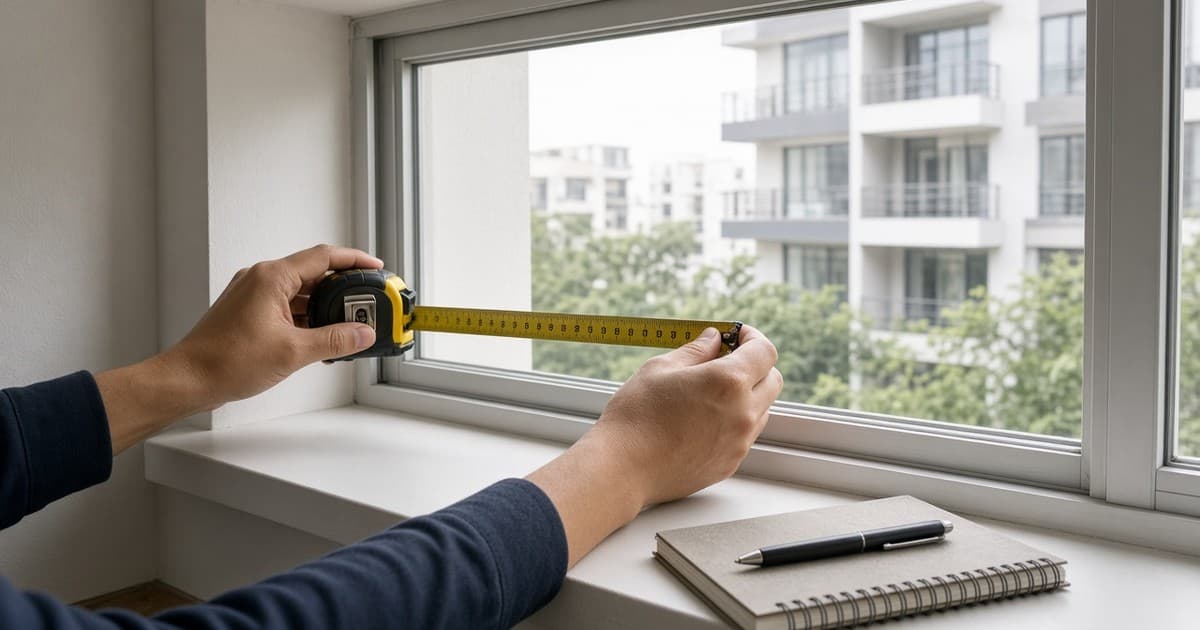
Our studio experience page explains how a visit works. Before you order, read how to measure windows for curtains in Dhaka so you know what the on-site measure checks.
Next step
Bring room photos or window sizes if you have them, and book a consultation through our contact page.
Frequently Asked Questions
Related guides
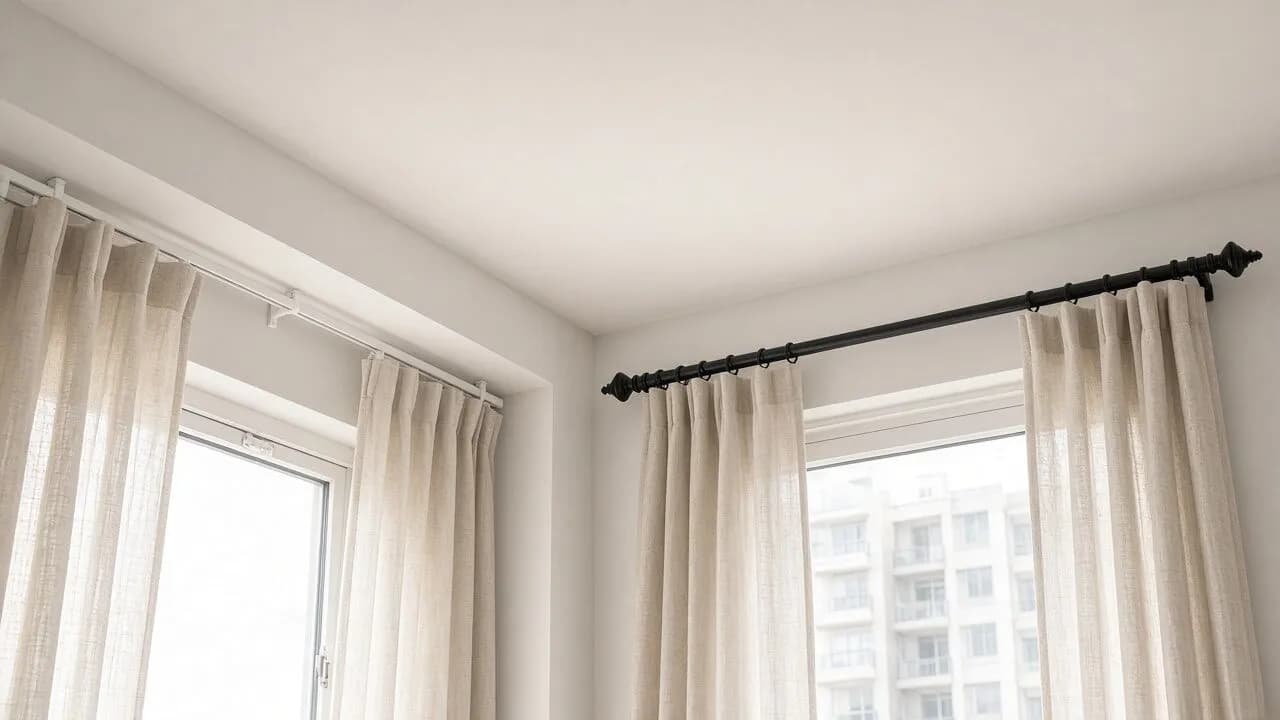
Curtain rod or ceiling track for a Dhaka flat?
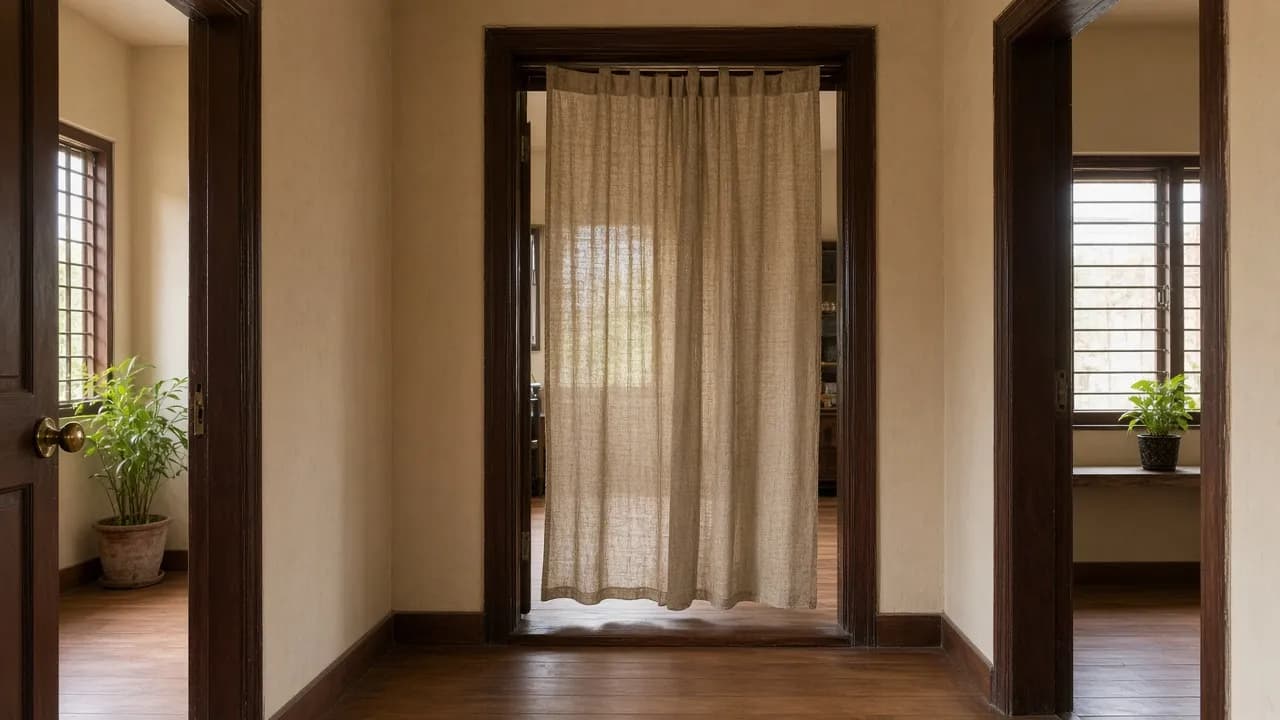
Door Curtains for Doorways and Balcony Doors: A Practical Guide
Venetian vs Zebra Blinds: Which Is Better for a Dhaka Flat?