Door Curtains for Doorways and Balcony Doors: A Practical Guide
Choosing door curtains for a Dhaka home? Learn which fabrics, tracks, and lengths work best for interior doorways and glass balcony doors, with practical fitting tips.
Door curtains can add privacy to an open doorway without installing a solid door. For an interior passage, a mid-weight curtain on a smooth track is often a practical choice. For glass balcony doors, sheer and blackout layers give you more control over sunlight and privacy.
In a Dhaka apartment, a curtain might separate the drawing room from a bedroom corridor or cover a balcony door facing neighbouring buildings. The fabric matters, but so does where the curtain gathers when someone walks through.
Doorway curtains work best when they stay out of the way
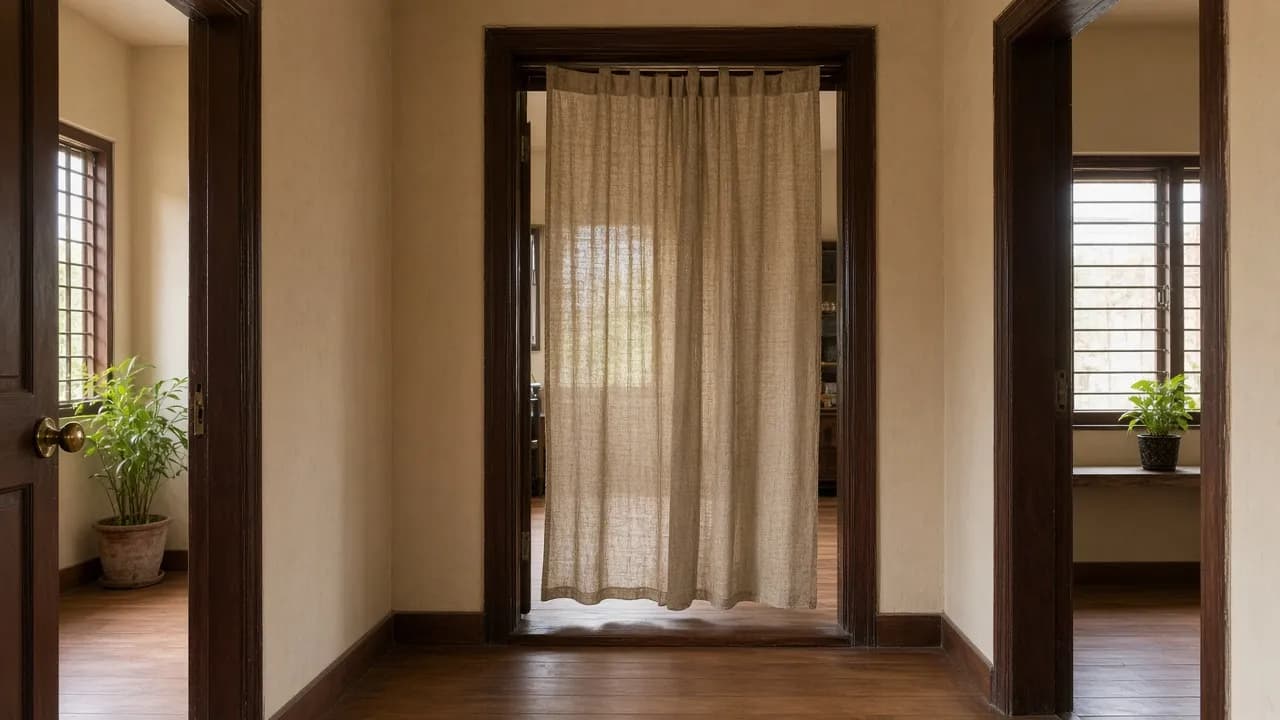
An open passage between the living room and bedrooms can feel exposed when guests visit. A curtain provides a simple way to screen that part of the home while keeping the doorway accessible.
For a frequently used opening, one panel that draws to the side is often easier to manage than two panels meeting in the middle.
The curtain needs space to gather beside the frame. If it hangs partly across the doorway when open, people will have to push through the fabric every time they pass.
A curtain can provide visual privacy, but it won't replace a solid door for security or sound isolation.
Choose the right fabric for each doorway
The best fabric depends on how the opening is used. A bedroom corridor may need an opaque curtain, while a passage between living and dining spaces might only need a softer visual division.
Opening | Recommended curtain | Main benefit |
|---|---|---|
Bedroom corridor | Mid-weight opaque curtain | Privacy |
Living and dining passage | Textured curtain | Soft visual separation |
Air-conditioned room | Lined curtain | Helps limit air movement |
Frequently used doorway | Single side-draw panel | Easy access |
Glass balcony door | Sheer + blackout layers | Daylight and privacy control |
For an interior doorway, a linen-look weave or cotton blend can offer a neat finish without excessive bulk.
Check the fabric against daylight if privacy matters. Some materials that look opaque indoors become translucent when backlit.
A lined curtain may also help reduce air movement between adjoining rooms. Hello Sun's thermal curtains are worth considering where this is a priority, although curtains won't seal a room like a closed door.
A well-positioned track makes everyday use easier
A ceiling-mounted track works well in many modern interiors, provided the ceiling structure is suitable. Wall-mounted tracks above the doorway are another option.
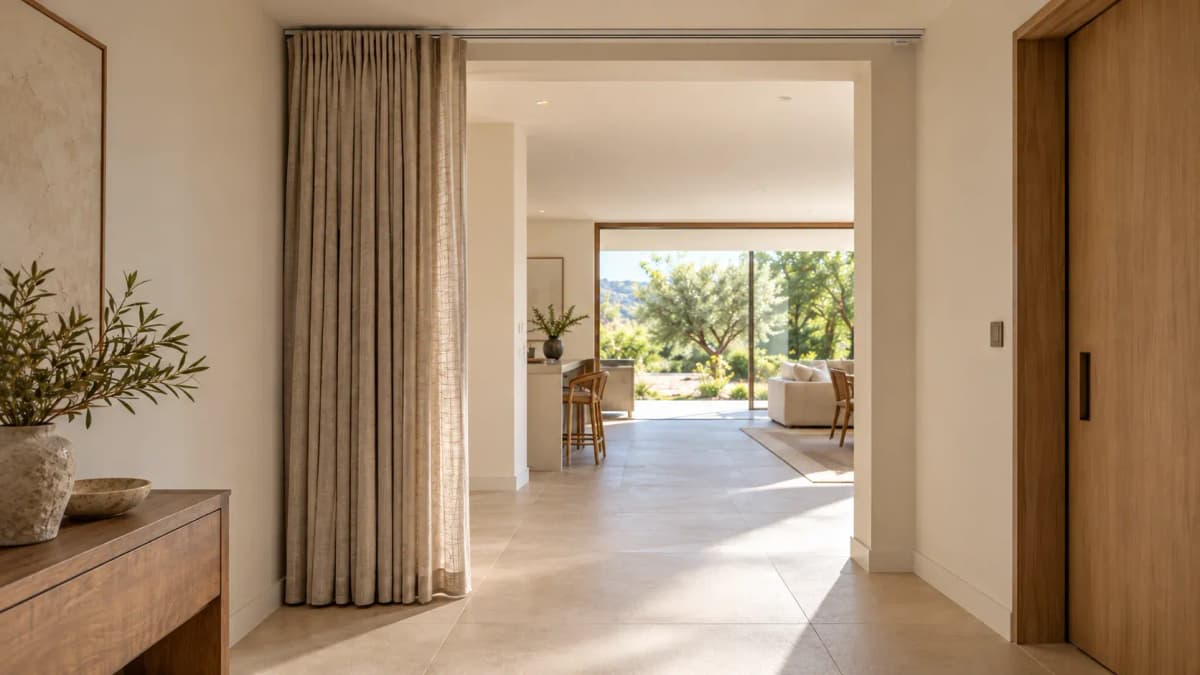
Where space allows, the track should extend beyond the opening. This gives the curtain somewhere to gather without blocking the passage.
Smooth-running hardware is particularly important for a doorway used throughout the day.
The position of nearby furniture matters too. A sofa, cupboard or light switch can affect which side the curtain should open towards.
For a narrow passage, keeping the opening clear is usually more useful than adding extra fabric fullness.
Keep the curtain hem slightly above the floor
Door curtains are handled more frequently than many window curtains. A pooling hem can get stepped on, drag along the tiles, and collect dust.
For a busy passage, it's generally better to leave a little clearance above the finished floor.

The exact length depends on the mounting position and floor level. Hello Sun's technicians measure openings on site so the curtain can be tailored to the space.
A ceiling fan near the doorway also deserves attention. Lightweight fabric may move into the passage when the fan is running. Bottom-corner weights can help, but fabric choice and airflow should be considered together.
Balcony door curtains need flexible light and privacy control
A glass balcony door brings natural light into the room, but it can also leave the interior visible from neighbouring apartments.
During the day, sheer curtains soften direct sunlight while keeping the space bright. At night, when indoor lights are on, sheers alone may provide little privacy.
Adding an opaque or blackout curtain gives you more coverage when needed.

For sliding balcony doors, the curtain should gather away from the panel used for entry. Where the layout allows, stacking it beside the fixed glass panel keeps the opening accessible.
Check that the fabric won't obstruct the handle or drag across the door's lower track.
Check these details before fitting door curtains
Before choosing the curtain and track, consider:
Opening width: Allow enough privacy coverage when the curtain is closed.
Stacking space: Check where the fabric will gather when open.
Door movement: Keep handles and sliding panels accessible.
Floor clearance: Avoid hems that drag through busy passages.
Nearby furniture: Make sure the curtain can open without catching on anything.
These details are easier to resolve before the track goes up.
How Hello Sun plans custom door curtains
Hello Sun designs, tailors, and installs made-to-measure curtains for interior doorways and balcony openings in Dhaka.
The process starts with understanding the space. A bedroom passage may need a simple opaque panel, while a balcony door may benefit from separate sheer and blackout layers.
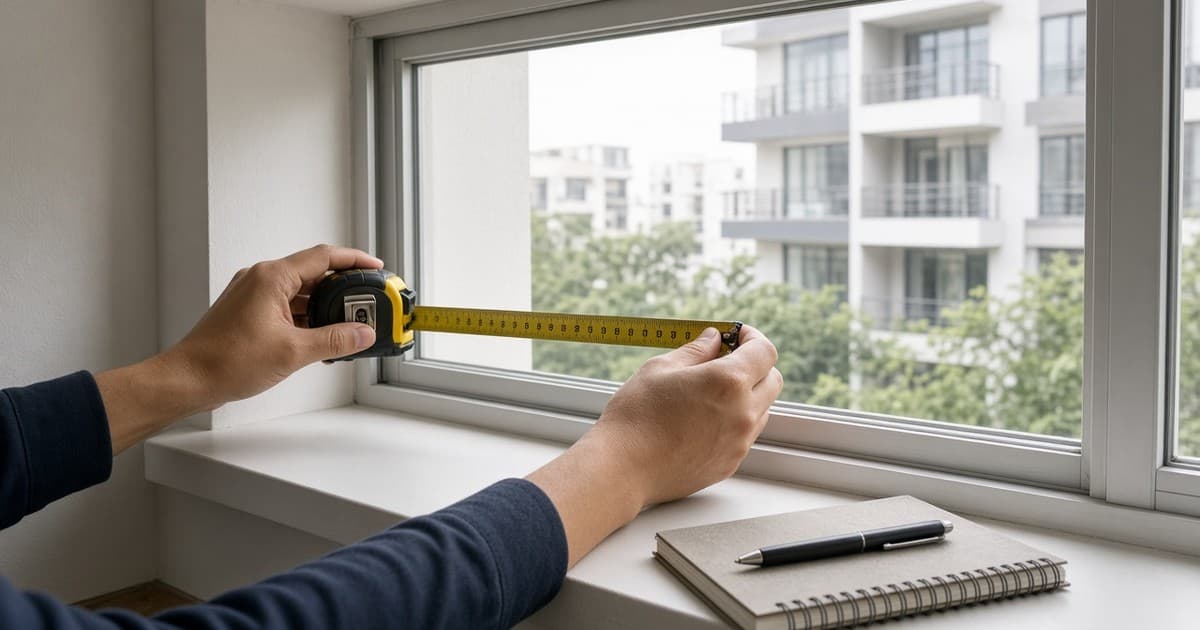
Hello Sun's technicians measure the opening on site, checking the available mounting space, floor clearance, and nearby fittings.
The curtain and hanging system are then planned around those measurements and professionally installed.
You can explore examples of the studio's broader work on the Hello Sun projects page.
Plan your doorway curtain with Hello Sun
Take a photograph of the opening from both sides, including nearby furniture and the wall beside the frame. It will help show where the curtain can gather.
Frequently Asked Questions
Related guides
Curtain rod or ceiling track for a Dhaka flat?
Venetian vs Zebra Blinds: Which Is Better for a Dhaka Flat?
Blackout vs sheer curtains, which is right for your Dhaka home?