Acoustic curtains for a noisy Dhaka flat: how heavy fabric and sealed edges cut road noise at the window, and what Hello Sun says they can't fix.
A Dhaka flat is almost never quiet. Horns from the main road, the building generator, echo from the stairwell and a construction site next door all come through the glass and the thinner walls. People living on busy Dhaka roads ask us whether acoustic curtains really cut traffic noise, or whether soundproof curtains is a promise nobody can keep.
They help. Your flat still won't be silent. An acoustic curtain dampens the noise coming in through the window and takes the harsh echo out of the room. Soundproofing is a building job, and we say that at the first meeting so the curtain is chosen for what it can actually do.
What apartment noise actually is
Different noise needs a different answer. Traffic and street noise (horns, engines, hawkers, rain on hard surfaces) comes through glass, frames and gaps. Generator and mechanical noise may be airborne or partly structure-borne, depending on where the plant sits.
Corridor and stair echo often comes in through doors and shared walls as much as through windows. Structure-borne vibration travels through slabs and frames, and soft furnishings help less with it.
Curtains mostly deal with noise coming in at the window and with echo inside the room. Work out which kind of noise you have first and you won't be disappointed later.
Acoustic drapery vs true soundproofing
Real soundproofing means laminated glass, sealed frames, heavier walls and isolation details. An acoustic curtain is a soft layer you can take down again. It adds mass in front of the glass and absorbs sound so the room feels less harsh, and it makes a street-facing window feel less intrusive as long as it's hung full with sealed edges.
We'll never claim 100% noise block, and we don't quote decibel or percentage cuts. What we can promise is a quieter room at the window.
Fabric weight, fullness and sealed edges: what makes the difference
How the curtain is built and hung matters more than the label on the fabric.

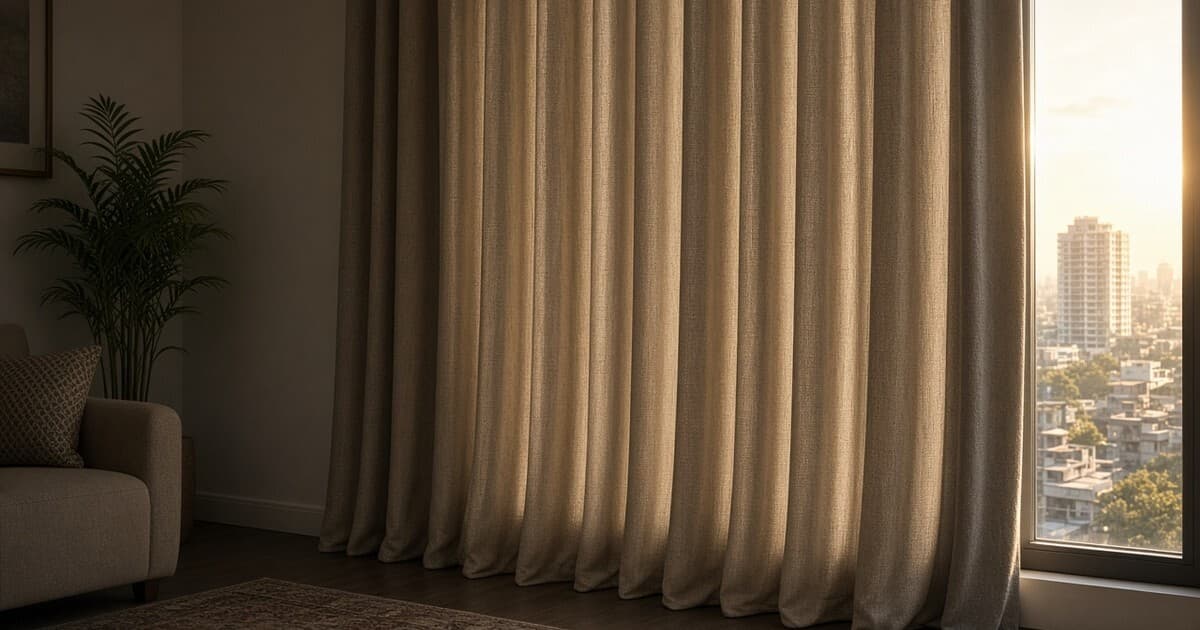
A heavy curtain in deep folds, the two panels meeting in the centre.
Heavier, multi-layer builds dampen more than one thin face. Thin panels leave gaps, while a deep gather closes the path sound takes. Side returns, enough overlap and a drop that meets the sill or floor stop sound slipping round the panel, and the track needs to run unbroken, because any split that lets light through lets sound through too.
A dense curtain hung well will beat a loosely hung acoustic panel with open sides. So the measure and the install are part of the acoustic job.
Best rooms to specify
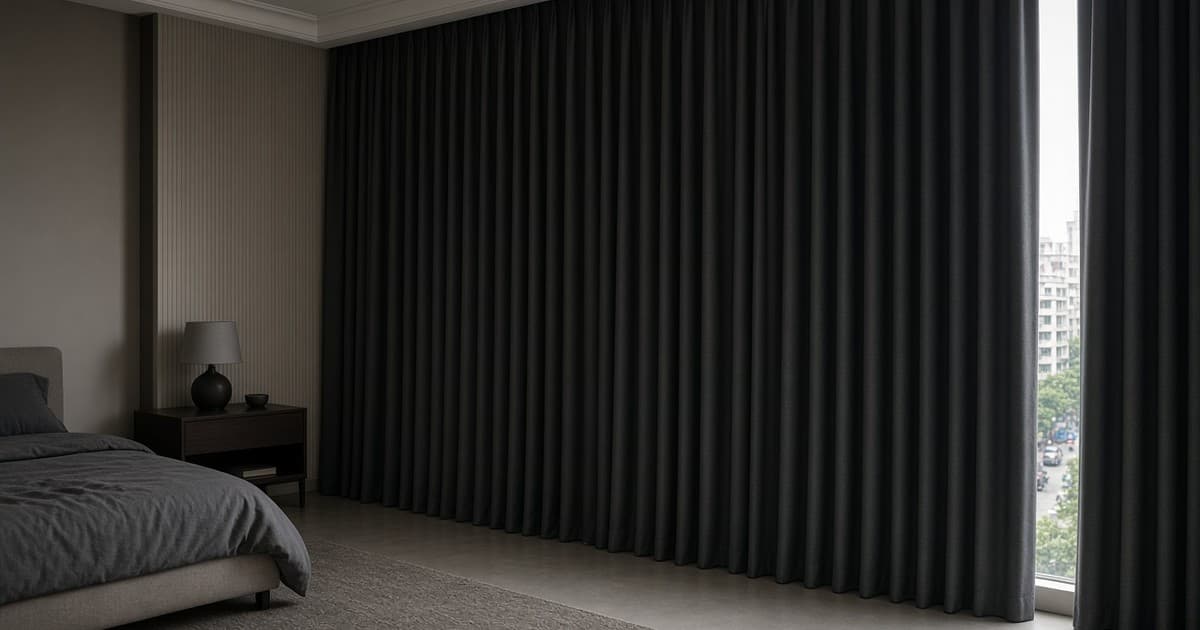
In street-facing bedrooms, traffic noise hurts most because you're trying to sleep. Clients with a bedroom over the road often ask us for acoustic curtains, usually layered with blackout curtains.
In home offices and media rooms, it's easier to concentrate and to hear dialogue once the window is softened and the echo in the room drops.
In living rooms on busy roads, daytime traffic bothers most families less in the living room than in the bedroom. A big glass wall still gains from a denser layer in the evening.
On west facing glass where heat and noise arrive together, look at thermal curtains too. A lot of denser builds help with both, though we won't put a number on either.
Layering with sheer or blackout without killing acoustics
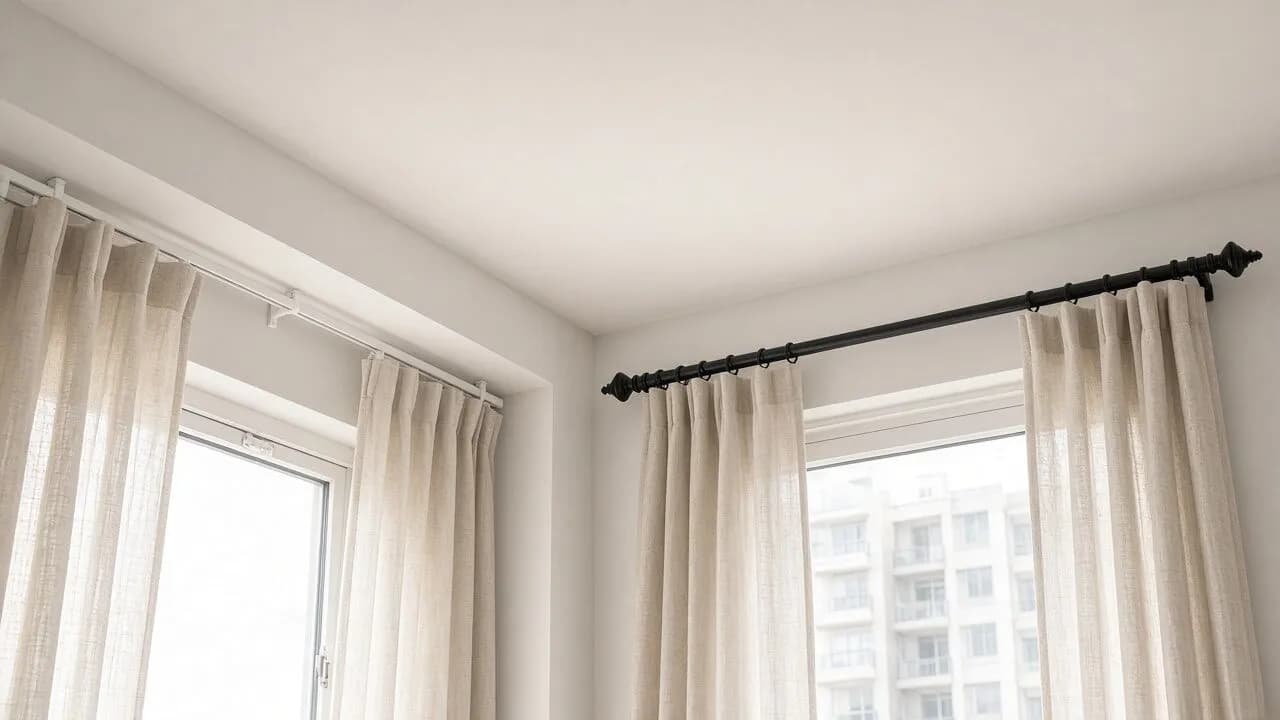
A sheer on its own does little for noise. In Dhaka flats we often hang a day sheer with an acoustic or blackout-acoustic layer behind it on a dual track. You keep soft daylight, then draw the heavy layer when the traffic builds or when you go to bed.
When it is closed, the acoustic layer should run unbroken. A decorative split that looks lovely when open can break the seal. Your consultant works out the fabric, heading and track so the room still feels like a home and stays comfortable to sit in.
What curtains cannot fix
Acoustic curtains won't solve gaps in frames or poorly sealed glazing. They won't stop noise through walls, floors and shared slabs, sound coming in by the door from corridors and stair cores, or vibration carried through the structure from plant or traffic.
If most of the noise is coming in somewhere other than the window, a curtain will only help a little. We tell you that at the first visit.
How Hello Sun consults for noisy flats
We handle the job from the first talk to the install. You speak with a consultant, choose fabric and track, we measure, make the curtains, and our own team fits them.
We find out what kind of noise you have, and which rooms matter at which hours.
You handle acoustic faces and linings at our Gulshan 2 or Elephant Road studio.
We decide whether to layer it with a sheer, blackout or thermal curtain.
We measure for fullness, returns, overlap and drop.
We install it so the closed curtain seals the way we planned.
Book through the studio experience page or our contact page, or call 01344-495444 or 01344-495666. The Gulshan 2 studio in Trillium Tower, Plot 32/A, Road 45 and 46 is open daily 10 AM to 10 PM. The Elephant Road studio at 272 New Elephant Rd is open 10 AM to 10 PM and closed on Tuesday. For the Elephant Road showroom's current number, see our contact page. Finished homes go up on Hello Sun projects once cleared.
Next step
Note which windows face the road and when the noise is worst, or just come and feel the fabrics. Start on the Hello Sun contact page or visit Trillium Tower in Gulshan 2. Read more on our acoustic curtains and in the curtain FAQs.