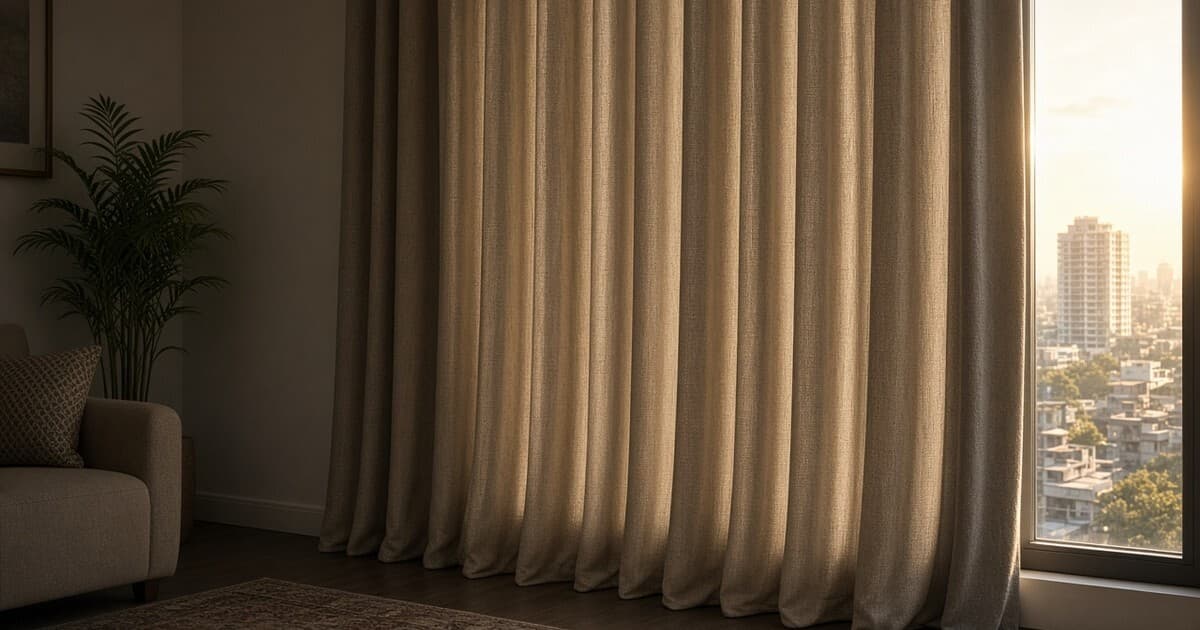
Thermal curtains cut sun heat at the glass in Dhaka flats when the lining is heavy and the hang is sealed. Hello Sun in Gulshan 2 explains when it works.
Yes, thermal curtains help with Dhaka heat. A properly made thermal curtain slows the sun's heat at the window, and it works best when the fabric is heavy and the hang is sealed at the edges. It takes load off the AC, but the AC still has to do its work.
A lot of the heat in a Dhaka flat comes in through the glass. West and south facing apartments soak up sun all afternoon, and with thin glazing and big openings a bedroom can stay hot with the AC running flat out. Clients ask us at the studio whether thermal curtains really help, or whether thermal is just a heavier blackout with a new label.
West sun and thin glass in Dhaka flats
On many Dhaka buildings the main problem is sun hitting the glass. Afternoon light through a west wall of windows heats the floor and furniture long before the thermostat reacts. In many Dhaka flats, thin glazing and full-height openings with little outside shading make it worse.
The curtain is the first soft layer inside the room. It can't change the glass. If the fabric, lining and install are chosen for heat, it can cut how much of that heat reaches the room you sit in.
A thermal curtain is built for heat
When we say thermal in the workroom, we mean how the curtain is built, and that comes down to lining, weight and the hang.
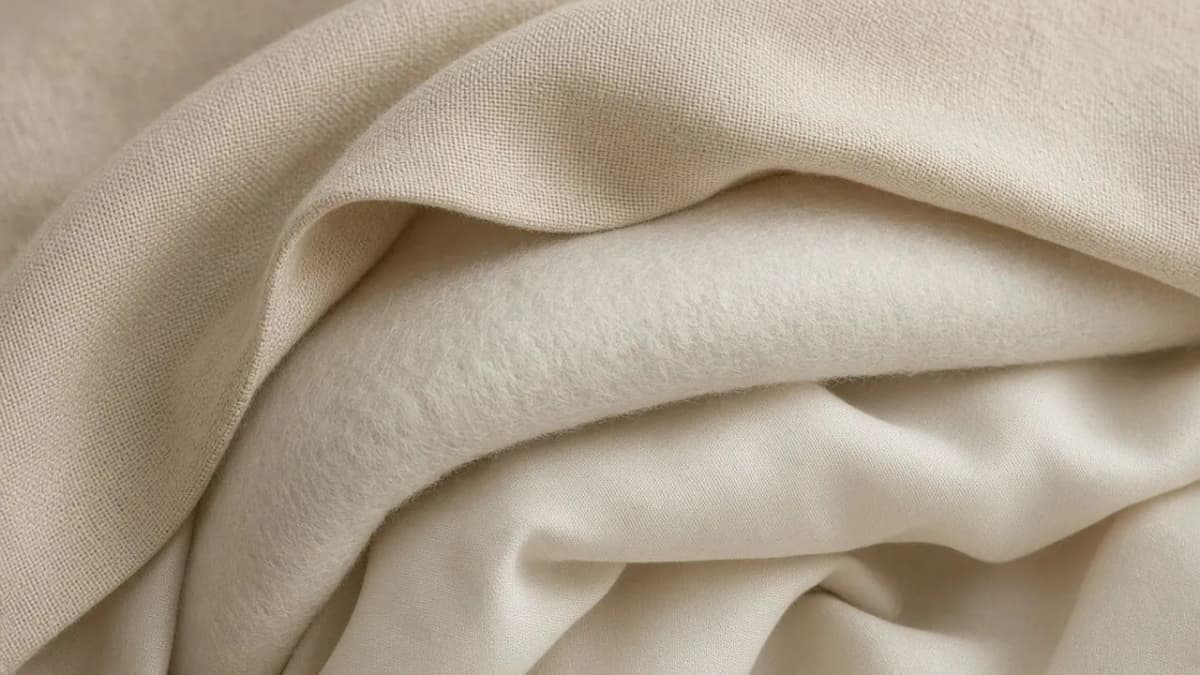
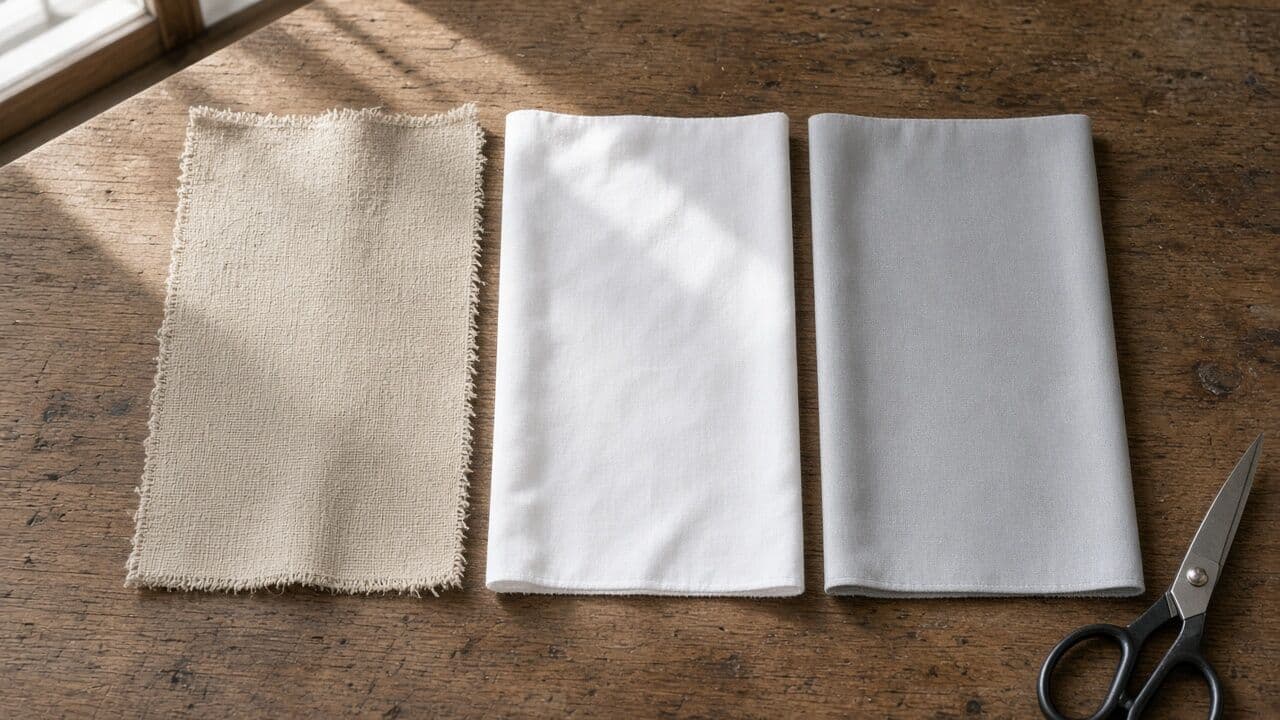
A curtain hem turned back to show the face cloth, a fuzzy interlining, and the lining.
A lining or interlining behind the face fabric adds insulation, and the fabric needs enough weight to slow heat moving through. The hang has to be sealed too, with enough overlap, side returns where needed, and a drop that closes the gap at the sill or floor.
A thermal curtain cuts how much heat the glass pushes into the room. Outside shading and better glazing still matter. So does an AC that's sized for the room.
How thermal compares with blackout and sheer
Each of these is made for a different main job.
Main job | Against heat | Light | |
|---|---|---|---|
Soften glare and keep the room bright by day | Little on their own | Room stays bright | |
Darkness for sleep and privacy | A denser face often helps, as a side effect | Dark | |
Heat, through lining, weight and sealed edges | Made for it | Many builds also dim the room, depending on the fabric |
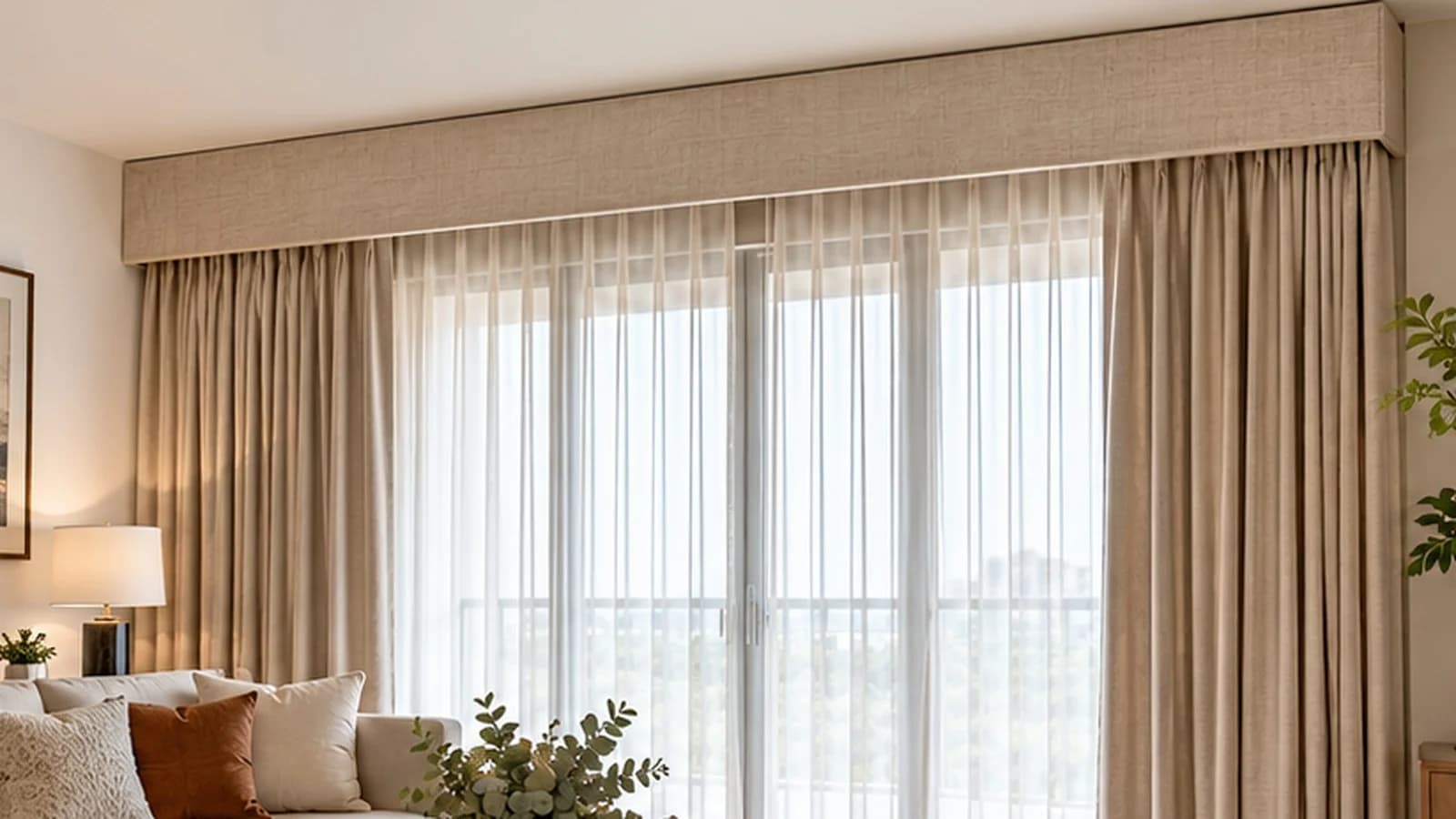
We often layer them: a sheer for daylight, then a thermal or blackout-thermal layer for the evening in west bedrooms and glass-walled living rooms. On a dual track each layer runs on its own.
Where thermal curtains earn their place
In west and south facing living rooms, afternoon sun is where thermal lining pays off most clearly. Less heat comes off the glass, and the sofa by the window stays usable.
On glass walls and wide openings, more glass lets in more heat. Fullness and sealed returns matter as much as the name of the fabric.
In a bedroom that heats up from midday on, draw a thermal or blackout-thermal layer before the heat peaks. Shift workers and small children feel the difference most.
In media rooms and home offices, heat and glare together make a room hard to sit in. A denser layer helps you concentrate and gives the AC less to do.
Tall rooms are their own case. In a double-height living room we plan the track and the fall of the fabric with the building, and a standard apartment drop won't do.
Sealed edges matter as much as the fabric
The fabric does half the job. The install does the rest.

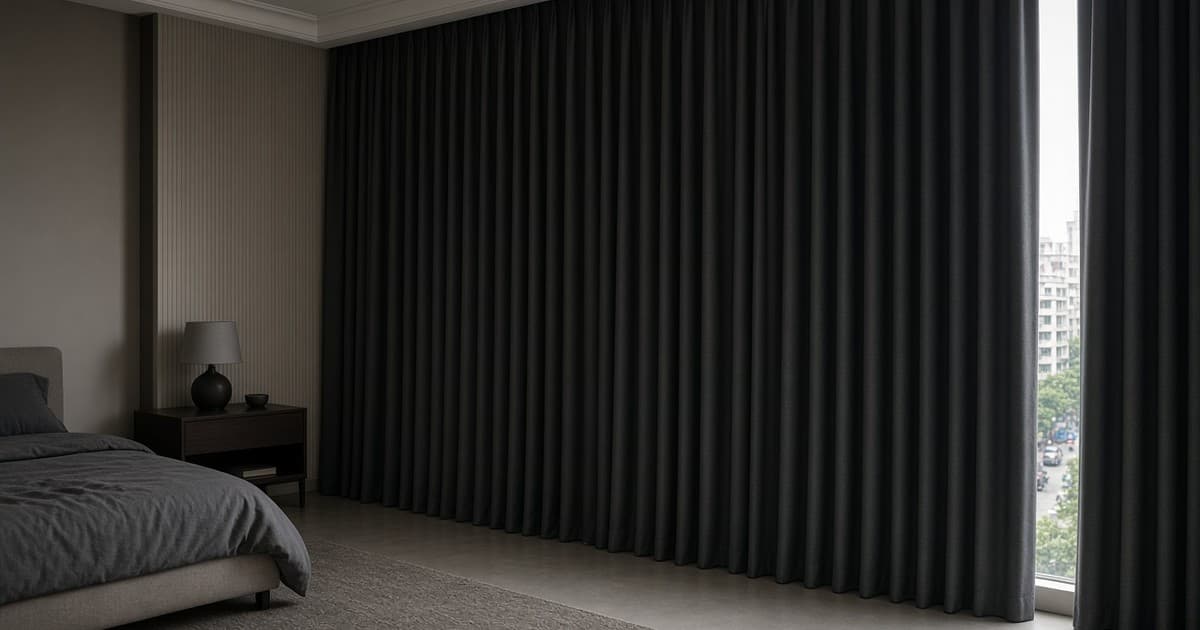
A charcoal curtain lying flat against the side wall, with no gap of daylight.
An outside mount covers more of the frame and cuts leaks at the edges, and side returns back to the wall close the gaps down each side. Floor-length drops, or drops sealed at the sill, stop warm air moving under the hem. The right track and overlap keep panels shut with no strip of light between them, and proper fullness is part of the seal, because a skimpy hang leaves gaps.
A thermal panel with open sides can do worse than a well-hung dense blackout. That is why we measure every opening on site before we make anything.
Where thermal curtains stop helping
Thermal curtains help, up to a point. We won't put a percentage on your electricity savings, because nobody can promise one honestly.
They can't fix single glazing that radiates heat whatever hangs in front of it, or a facade with no outside shading. They won't make up for an undersized AC or a room with other big heat sources, and they can't close gaps left by an incomplete install.
Shading outside, better glass and good drapery work best together. Ask for thermal when you know heat comes in through that window, and keep any building upgrades on your list too.
How Hello Sun does it
We take the job from first conversation to install. You talk to a consultant, pick the fabric and track, we measure, make the curtains in our workroom, and our team fits them, with motorised tracks where they make sense.
We note which way each window faces and how you use each room through the day.
You handle thermal faces and linings at our Gulshan 2 flagship or the Elephant Road atelier, both listed on our contact page.
Together we decide whether thermal hangs alone or with a sheer or blackout layer.
We measure on site for overlap, returns and drop.
We install it so the curtain looks planned with the room from the start.
Our studio experience page explains how a visit works, and more answers are in our curtain FAQs. Finished work goes up on Hello Sun projects once cleared for public use. If road noise comes in with the heat, read acoustic curtains for noisy Dhaka flats.
Next step
Bring room photos or window sizes if you have them, and book a thermal curtain consultation through our contact page.