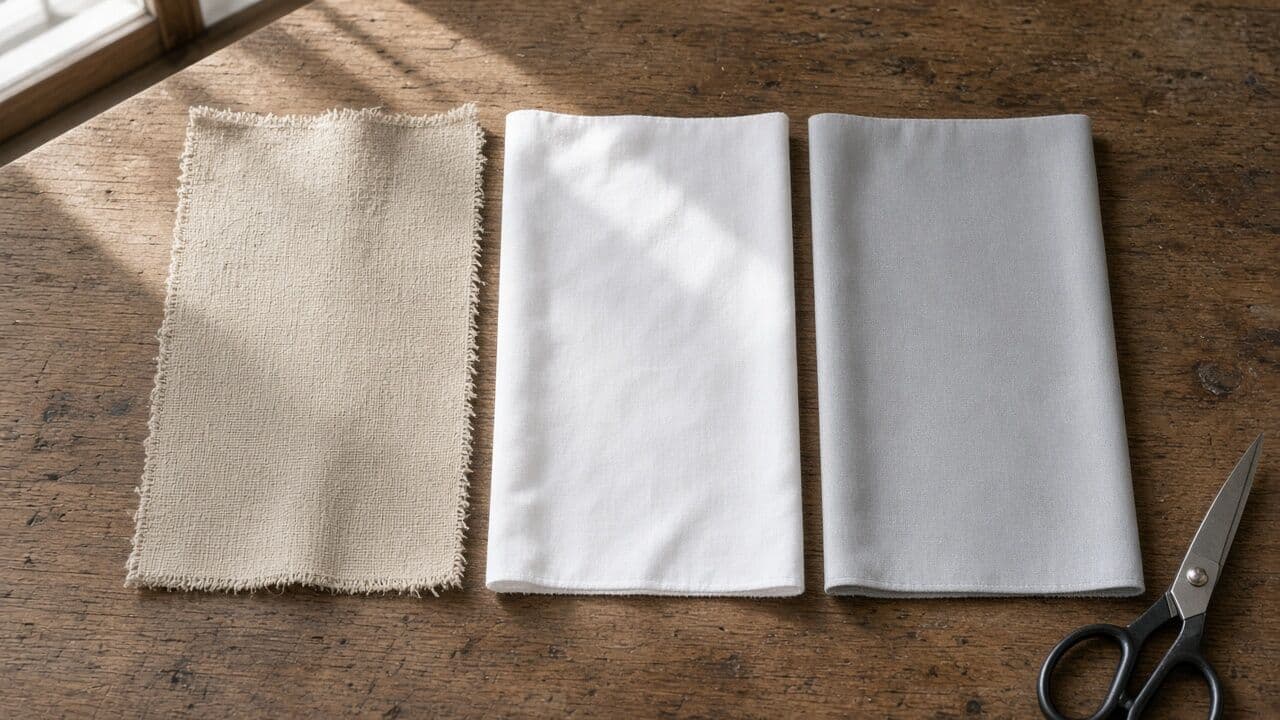
Which curtain fabric holds up to Dhaka sun and monsoon damp, and why the lining matters as much as the cloth you choose.
For most Dhaka homes, a good polyester blend or a linen-look blend is the safest curtain fabric. Both hold their shape through monsoon humidity and come through regular washing well. Keep pure linen and velvet for rooms where you're happy to look after them, and choose the lining at the same time as the face fabric.
A curtain cloth that looks perfect in a showroom has a harder life by a Dhaka window. It sits in direct sun for hours and breathes damp air for half the year. Then there's the dust.
The fibre on the label matters less than people expect. How the cloth is woven and how it's lined decide most of how it ages.
Sun and damp wear a curtain out faster than use
West and south facing windows take the hardest sun. Dark colours fade there first, and thin natural fibres can weaken where light hits the same folds every afternoon.
Humidity works more slowly. From the monsoon onward, natural fibres take on moisture and lose their crispness, and a curtain left bunched against damp glass can start to smell.
Near balconies and street-facing windows, dust adds to it. Loose or deeply textured weaves hold far more of it than smooth, tight ones.
Fabric | How it copes in Dhaka | Where we'd use it |
|---|---|---|
Polyester blend | Holds its shape in humid air and washes easily | Family rooms and large windows |
Linen-look blend | Linen texture with much less creasing | Living and dining rooms |
Pure linen | Beautiful, and creases in damp air | Rooms where a relaxed crumple suits the look |
Cotton | Soft and washable; dark shades fade in direct sun | Casual bedrooms and children's rooms |
Velvet | Rich drape; the pile holds dust near open windows | Closed, air-conditioned formal rooms |
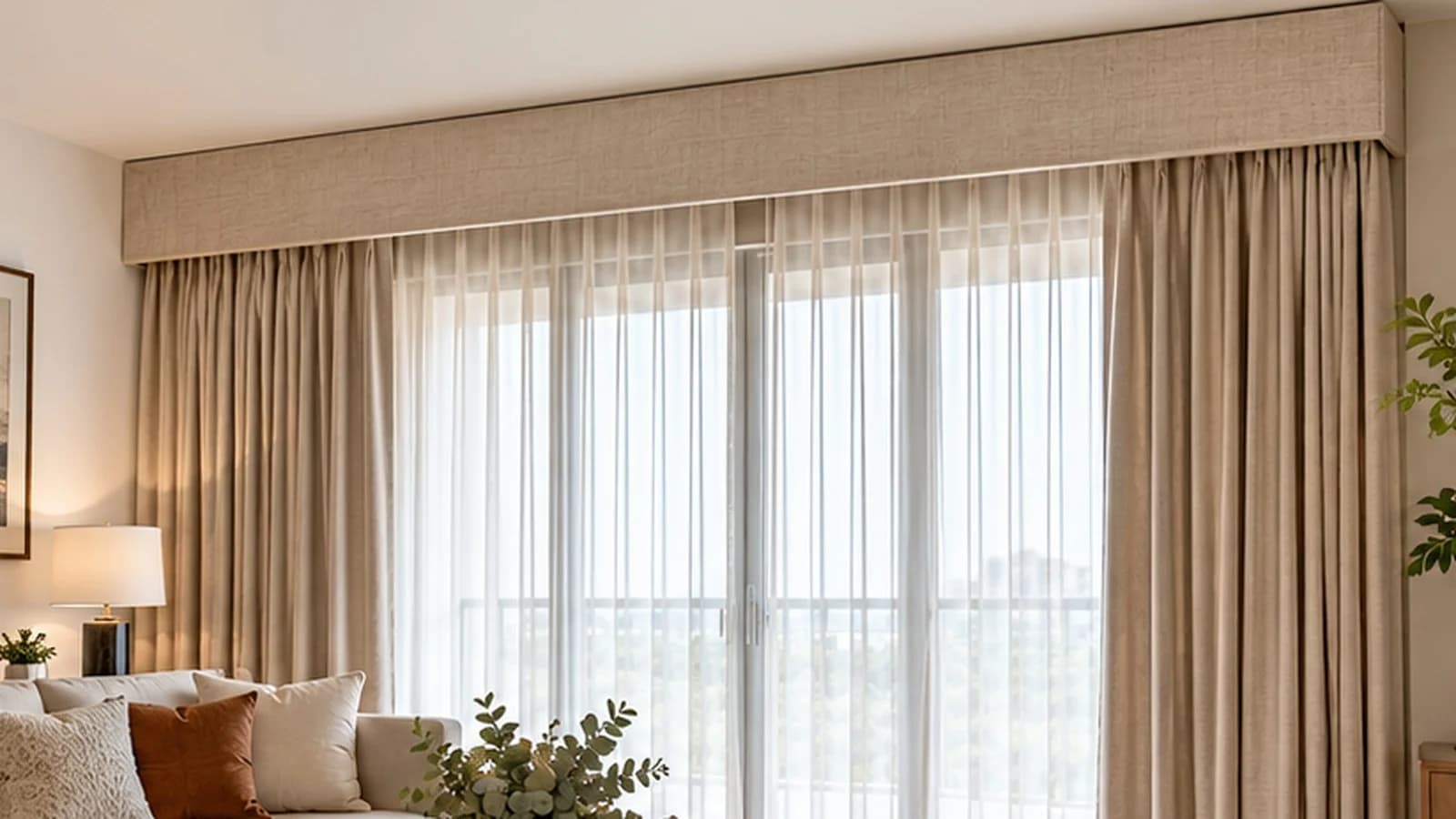
Sheer | Filters light; quality varies a lot | A day layer in front of a heavier curtain |
A good blend is the safe default
Polyester has a cheap reputation it doesn't always deserve. A quality polyester-rich blend holds its shape in humid air and dries quickly after a wash. The better ones have a matte, linen-like face that looks nothing like the shiny curtains people remember.
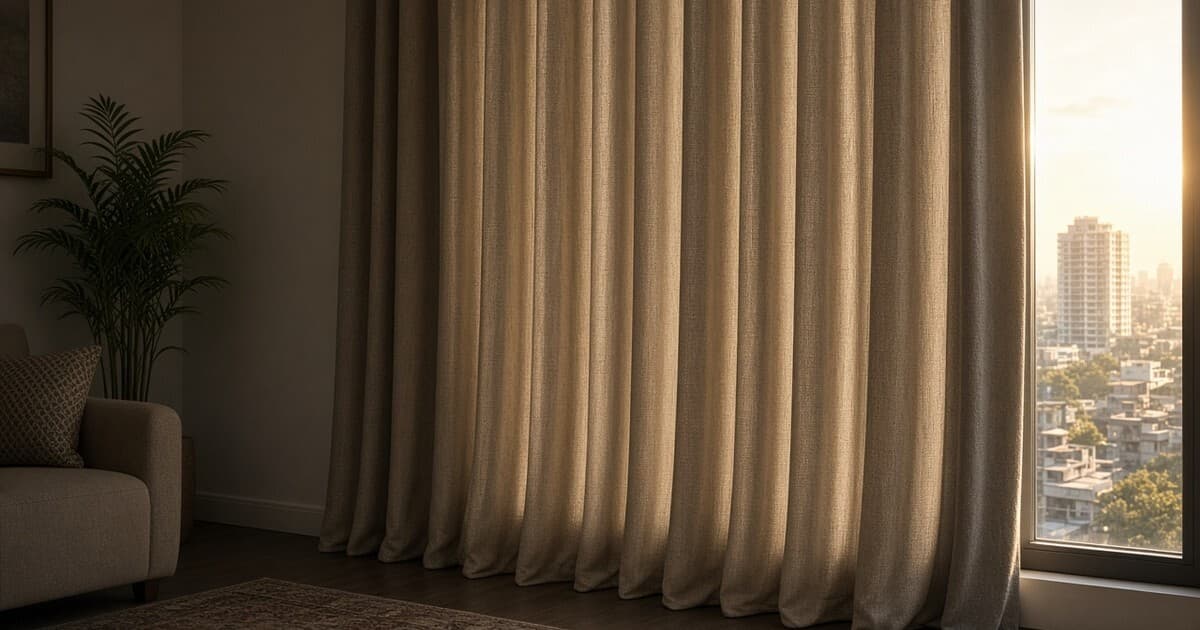
A linen-look blend is the middle ground most living rooms want. You get the loose, irregular texture of linen with far less creasing. On a ripple fold heading it hangs in even waves, helped by the weighted bottom corners we sew into every curtain.
Linen and cotton need a room that suits them
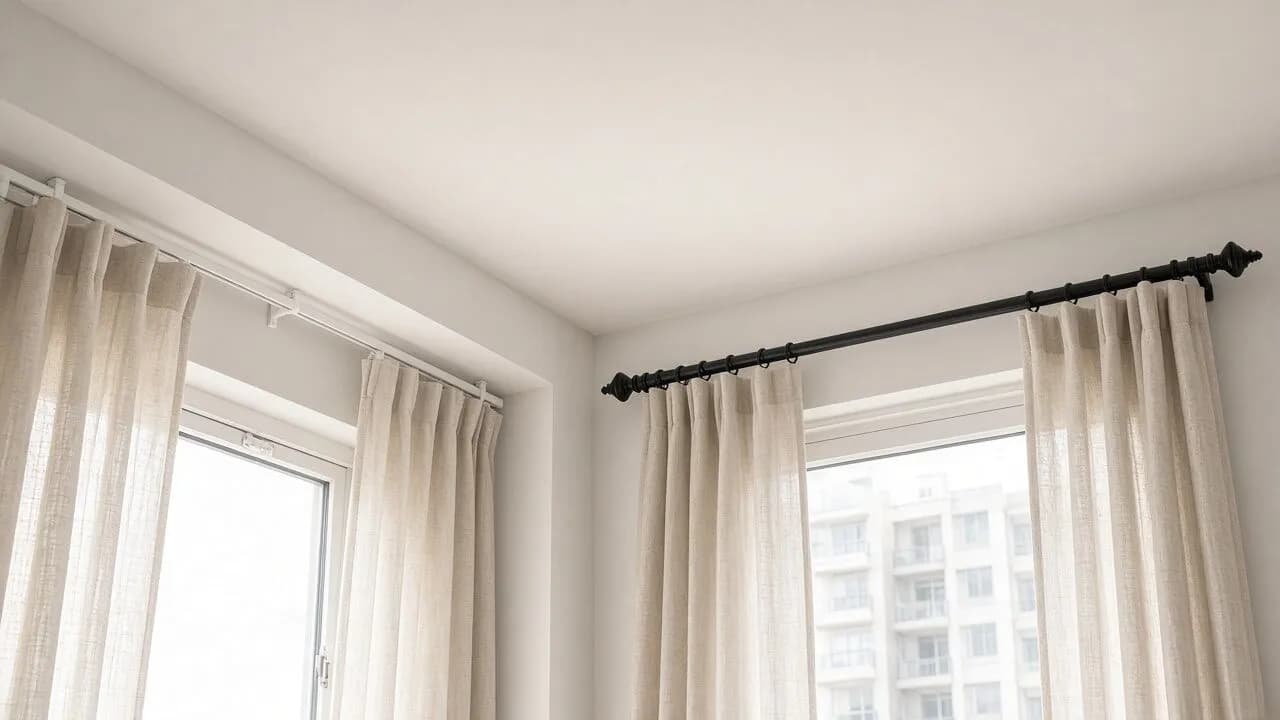
Pure linen is lovely, and it does crease. In a dining room or a breezy living room where a soft crumple is part of the look, that's fine. In a crisp formal room it'll frustrate you.
Cotton is easy to live with and washes well. Our solid range includes dyed cottons, and they suit casual bedrooms and children's rooms.
Dark cotton in direct sun is where we're careful. Solid dark fabrics fade over time, so we fit UV-protective lining to any solid curtain that faces direct sunlight.
Velvet belongs in a cool, closed room
Velvet gives the richest drape of any curtain fabric, and our solid range carries it. The pile does hold dust, though. Beside an open balcony door it needs more cleaning than most people want to do.
In an air-conditioned drawing room or master bedroom where the windows stay shut, velvet ages well and looks the part.
The lining does as much work as the fabric
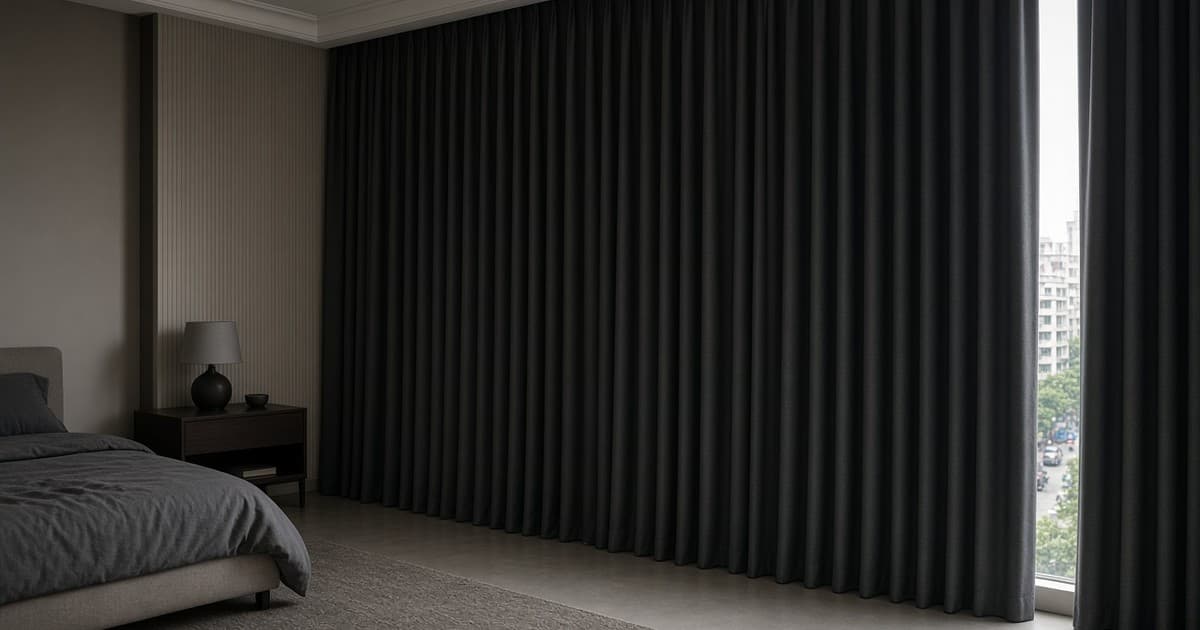
A lining protects the face fabric from sun and changes how the whole curtain hangs. In a bedroom, a high-grade blackout lining behind a decorative face lets you keep the cloth you love and still get a dark room.
For heat or road noise, the build matters more than the face fabric. That's what our thermal curtains and acoustic curtains are made around.
Pick the face fabric and the lining together. A heavy lining can change how a light cloth falls, and you'll want to see the pair hanging before you commit.
Check a fabric in daylight before you commit
Four checks save most regrets.
Hold it against a real window. Some fabrics turn far more transparent with light behind them.
Read the fibre composition. Linen look on a label tells you nothing about what's actually in the cloth.
Ask how it's cleaned, and be honest about whether you'll do it.
Look closely at the weave. A very loose or deeply textured cloth will hold more dust by a balcony.
Our Gulshan 2 flagship holds 1,000+ imported swatches from European and Japanese textiles, so there's plenty to hold up to the light.
How Hello Sun does it
We choose fabric window by window, starting with which way it faces and how much sun it takes. Your consultant pulls swatches for that window, then hangs the lining behind the face fabric so you see them as one curtain.
Once you've chosen, we measure on site and tailor each curtain to that measure. Our own team hangs it.
Browse our textured curtains before you visit. If you're still deciding on a day layer, read blackout vs sheer curtains for Dhaka apartments.
Next step
Note which way your main windows face, then book a fabric consultation through our contact page.