
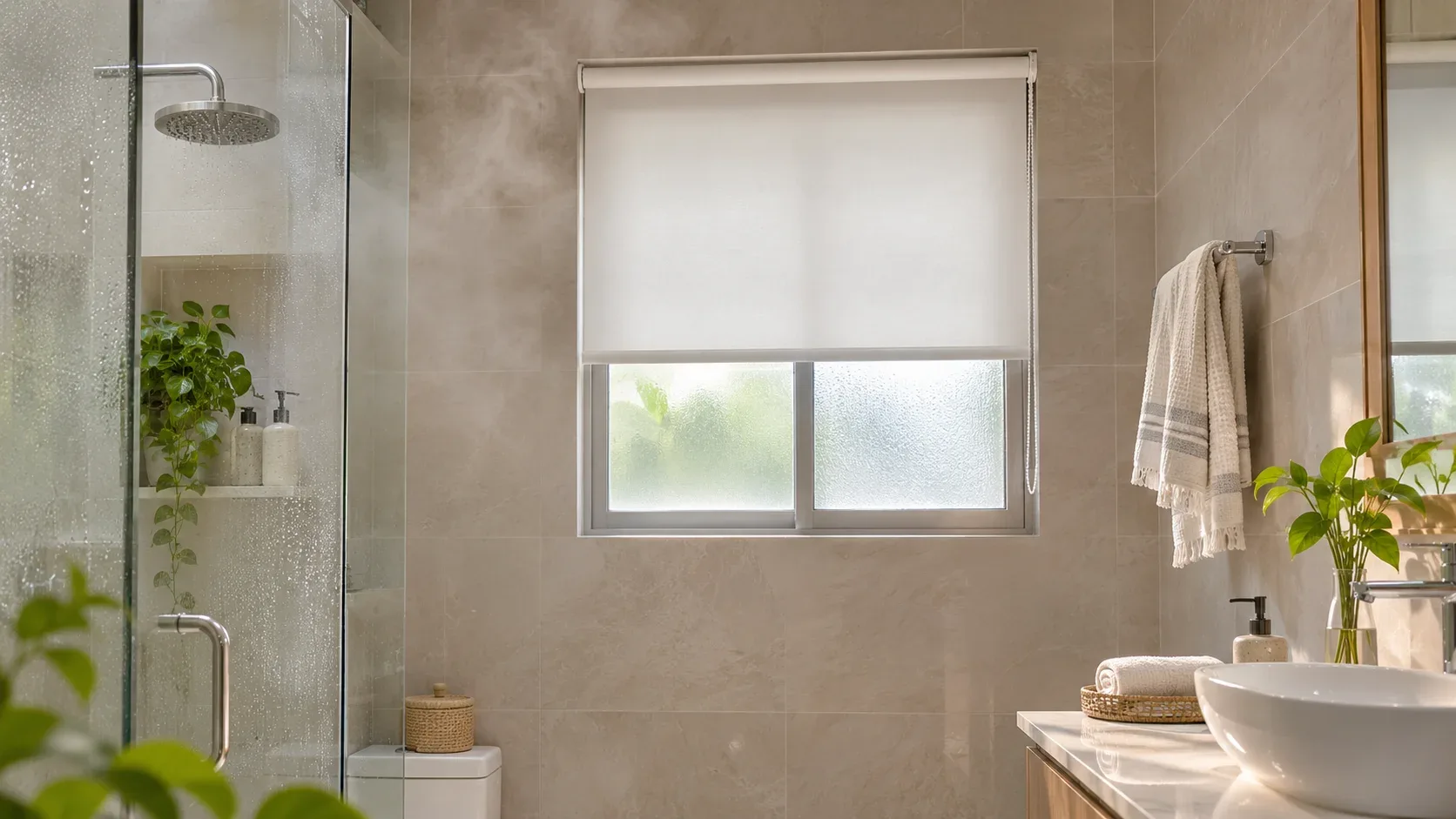
Choosing a bathroom window covering in Dhaka? Learn when roller blinds, washable curtains or privacy glazing make sense, with advice on steam, ventilation, and nighttime privacy.
A moisture-resistant roller blind is often a practical choice for a bathroom window in Dhaka, provided it stays clear of direct shower spray. For a window that gets soaked regularly, appropriate privacy glazing may be a better solution. A short, washable curtain can work in a larger bathroom where the fabric has room to dry.
The right choice depends on where the water reaches, how the window opens, and whether the covering provides enough privacy after dark. These details matter more than choosing a blind simply because it's labelled waterproof.
Start with the Window's Exposure to Water
A bathroom window in a Dhaka flat might sit high above the toilet, beside a washbasin, or directly inside the shower area. The difference changes which window treatments make sense.
A window above a dry vanity may receive steam and occasional condensation. A window beside the showerhead can be splashed every day, with water reaching the glass, frame, and any covering fitted over it.
Ventilation matters too. In a small bathroom facing a narrow service shaft, moisture may linger around the window long after the shower. The problem can become more noticeable during the monsoon, especially when the exhaust fan is ineffective.
Before choosing a covering, check whether the window frame and surrounding tiles dry between uses. Persistent condensation, damp patches, or recurring mould indicate a moisture problem that needs attention alongside the window treatment.
Bathroom Blinds, Curtains or Privacy Glass?
There isn't one covering that suits every bathroom. These are the options worth considering for common window arrangements.
Window Condition | Option to Consider | What to Check |
|---|---|---|
Small window away from direct spray | Moisture-suitable roller blind | Fabric, hardware and cleaning requirements |
Window directly beside the shower | Appropriate obscure glass or privacy film | Wet-area suitability and nighttime privacy |
Larger bathroom with good ventilation | Short, washable curtain | Fabric care, drying and distance from water |
Window facing a nearby apartment | Opaque blind or suitable privacy glazing | Privacy with interior lights on |
Louvre window behind a security grill | Blind mounted clear of moving parts | Opening clearance and ventilation |
A useful way to narrow the choice is to ask whether the covering will stay mostly dry during normal use. If it won't, start by examining alternatives to an indoor fabric treatment.
When a Roller Blind Is the Practical Choice
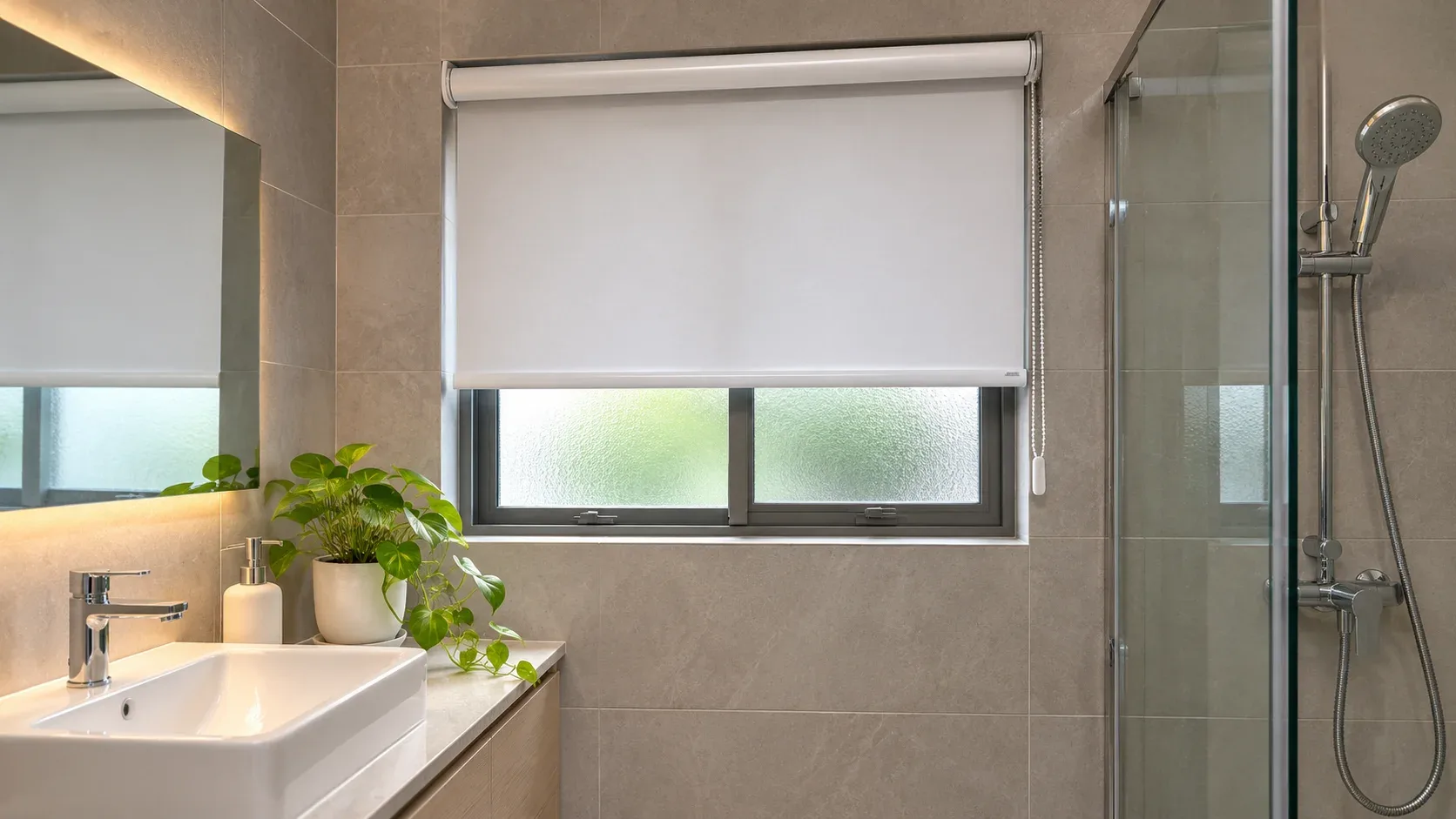
A roller blind is compact, easy to raise, and visually unobtrusive over a small bathroom window. Certain PVC-based or specially specified wipe-clean fabrics can be easier to maintain in humid conditions than absorbent drapery.
Hello Sun's roller blind collection includes PVC materials and identifies bathrooms as one of the spaces where roller blinds may be considered.
That doesn't mean every material or operating system in the collection is suitable for repeated wetting. The coating, roller tube, brackets, and controls all need to suit the installation conditions.
For a window outside the shower's direct splash area, ask which available fabric and hardware combination is appropriate for the room's humidity and cleaning needs.
When a Short Curtain Makes More Sense
A curtain can soften a larger bathroom, particularly where the window sits away from the shower, and there is enough space for the fabric to hang freely.
A suitably washable polyester fabric may be an option. It should be easy to remove for cleaning and able to dry properly after exposure to humid air. The exact textile and care label matter.
Keep the hem clear of wet flooring and avoid positioning the fabric where it will brush against the shower enclosure.
A heavy, absorbent curtain or a layered treatment with several fabric folds generally demands more care in a bathroom that remains damp.
Hello Sun's curtain collection can provide a starting point for discussing materials, although bathroom suitability must be confirmed for the selected fabric.
When You Shouldn't Install a Bathroom Blind
Sometimes the most useful recommendation is to leave the window without a conventional blind.
The window receives direct shower spray. A standard roller blind may leave wet fabric wrapped around its tube, while fittings and controls remain exposed to repeated splashing. Unless a product is specifically suitable for those conditions, a different privacy treatment is worth considering.
The bathroom never seems to dry. If condensation remains on the walls for long periods or mould repeatedly appears around the frame, improve ventilation and investigate moisture sources before adding another surface that needs cleaning.
The blind would obstruct the opening. A small window with closely fitted security bars or outward-moving louvres may not have enough room for a blind to operate safely and freely.
Suitable privacy glazing already does the job. An adequately obscured window may not need a second covering, particularly if the bathroom is very small and the glass can be cleaned easily.
Frosted glass and privacy film aren't products you should assume in Hello Sun supplies. They are alternatives to consider when a conventional indoor blind isn't appropriate.
This article concerns bathroom windows, not shower curtains used to contain water inside a shower enclosure.
Privacy After Dark Is Different from Daytime Privacy
In densely built Dhaka neighbourhoods, bathroom windows may face another apartment or a shared ventilation shaft. Even a small opening deserves careful attention when neighbouring windows are close.
During daylight, frosted glass or a light-filtering covering may make the interior difficult to see. After dark, the bathroom becomes brighter than the space outside, and privacy conditions change.
Frosted glass varies in how strongly it obscures the view. Depending on the glass, lighting, and distance from the surface, a person standing close to it may still create a recognisable shape.
Likewise, a solar screen or sheer curtain shouldn't be treated as a dependable nighttime privacy barrier.
An opaque blind generally provides stronger visual screening when closed, although gaps at the edges can still matter. Choose enough coverage for the window and check how the fitting sits against the frame.
For a bathroom facing another building, evaluate privacy with the interior light on rather than relying only on what the window looks like during the day.
Our blackout versus sheer curtain guide explains why lighting conditions change visibility through different window fabrics.
A Blind Must Leave Grills and Louvres Clear
Many Dhaka bathroom windows include a metal security grill, opening glass louvres, or a handle that projects into the room.
A blind installed too close to the frame may catch on these parts. It can also prevent the window from opening properly, leaving less opportunity for humid air to escape.
For a louvred window, check clearance with the blades fully open. For a window with an internal grill, wall mounting above the frame may create the necessary space, provided the surrounding surface is suitable for fixing.
The blind should be able to lower without catching and rise without interfering with the opening.
During a power cut, an operable window can be particularly useful if the bathroom normally relies on an electric exhaust fan. Preserving its function is more important than achieving a perfectly tight-looking installation.
An on-site assessment can determine whether there is enough room for the proposed covering.
Keeping the Window Treatment Clean and Dry
A moisture-resistant surface still needs maintenance. Dirt can accumulate on a blind, and dampness can remain around the tube, brackets, or window frame.
After showering, use the exhaust fan or open the window where safe and practical. Give the room time to dry. If the blind is visibly wet, don't repeatedly roll it up and leave moisture trapped inside.
Use the manufacturer's cleaning instructions for the actual material. A soft cloth and a suitable mild cleaning solution may be appropriate for some wipe-clean surfaces, but not every fabric or finish tolerates the same treatment.
Avoid applying vinegar, bleach, or strong cleaning products to a blind without checking compatibility. These products can affect coatings, metal components, or surrounding finishes.
If mould keeps returning, cleaning the blind alone won't solve the problem. Investigate the moisture source, ventilation, and any leaks.
Planning a Bathroom Window Treatment with Hello Sun
For a small bathroom window, photographs can be more useful than a description of the room.
Take one photograph showing the entire window and surrounding wall. A second should show the window fully open, including any grill or louvre movement. It also helps to show the position of the showerhead and where water normally reaches.
These details allow the discussion to focus on the actual opening.
Hello Sun can help you compare available roller blind materials and systems against the conditions of your bathroom. Its technicians measure windows on site before production and installation, with the fitting position considered as part of the window-treatment plan.
For a bathroom exposed to regular direct spray, an ordinary indoor blind may not be suitable. Product-specific material and hardware limitations should be confirmed before an order is accepted.
If you're furnishing a bathroom in Dhaka, contact Hello Sun for a window-treatment consultation. Share photographs of the window, its opening mechanism, and the nearby shower area so the team can assess whether an available blind or curtain is appropriate.