Screen or blackout roller blinds? Learn what 1%, 3% and 5% fabric openness means, how nighttime privacy changes and which option suits each room in a Dhaka flat.
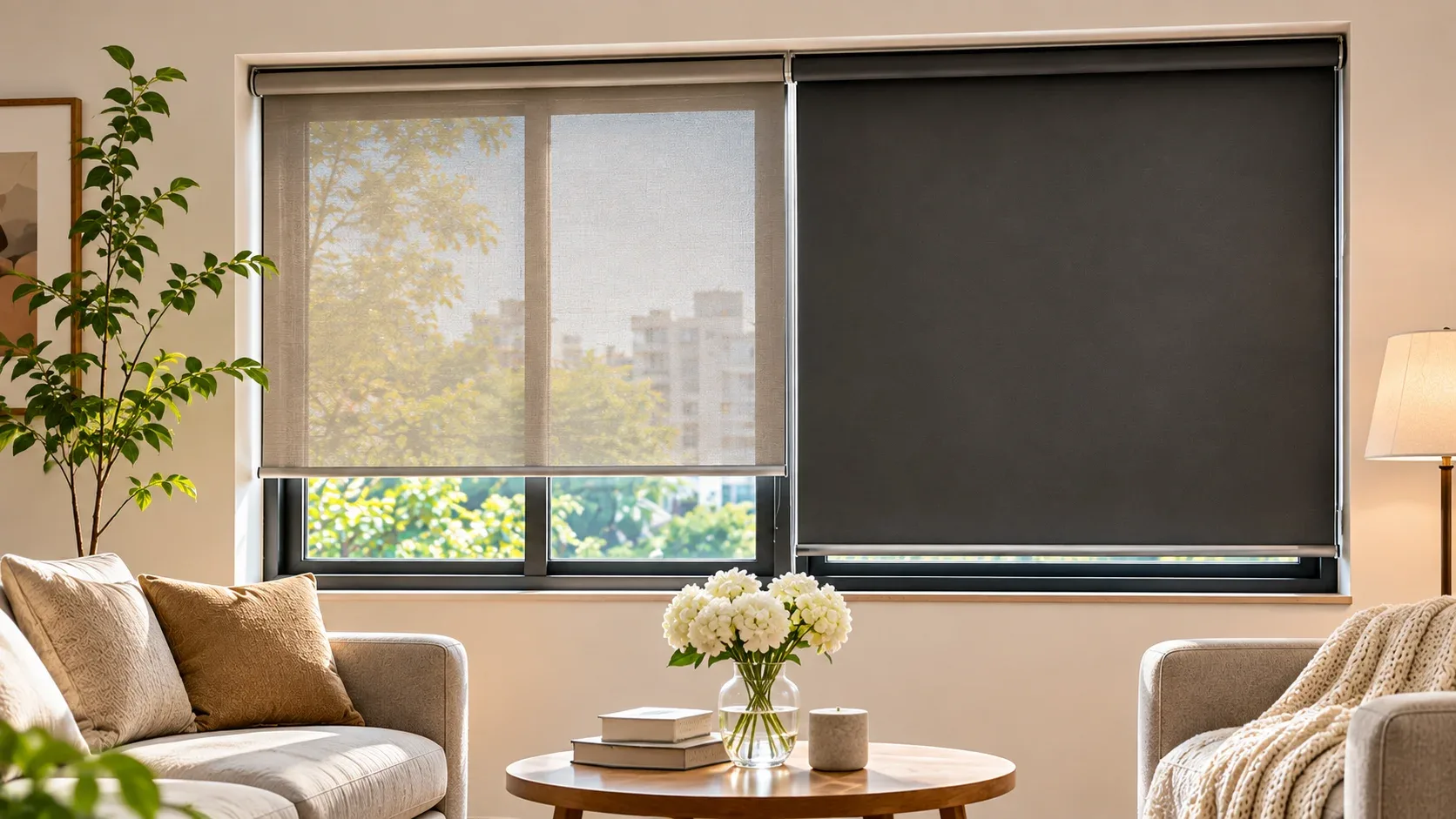
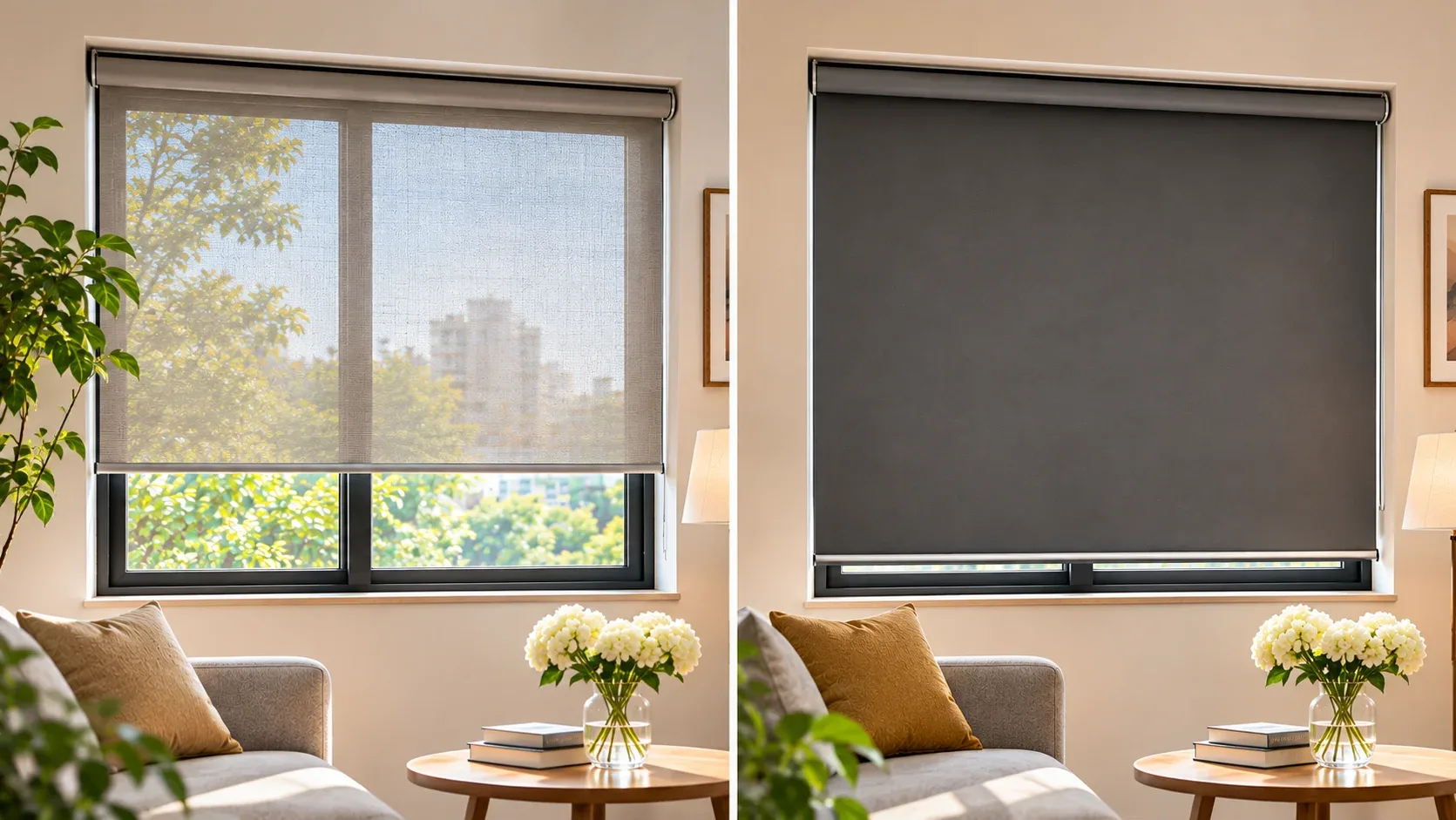
A screen roller blind is usually a good choice for living rooms and home offices where you want daylight without harsh glare. A blackout roller blind is better suited to bedrooms and media rooms where darkness and privacy matter more.
A screen lets you see some of the outside view during the day, although it may offer limited privacy after sunset. Blackout fabric blocks light passing through the material, but gaps around the blind can still admit daylight.
In a Dhaka flat, the decision depends on when you use the room, the direction of the windows, and how the blinds will be fitted.
Screen vs Blackout Roller Blinds: What's the Difference?
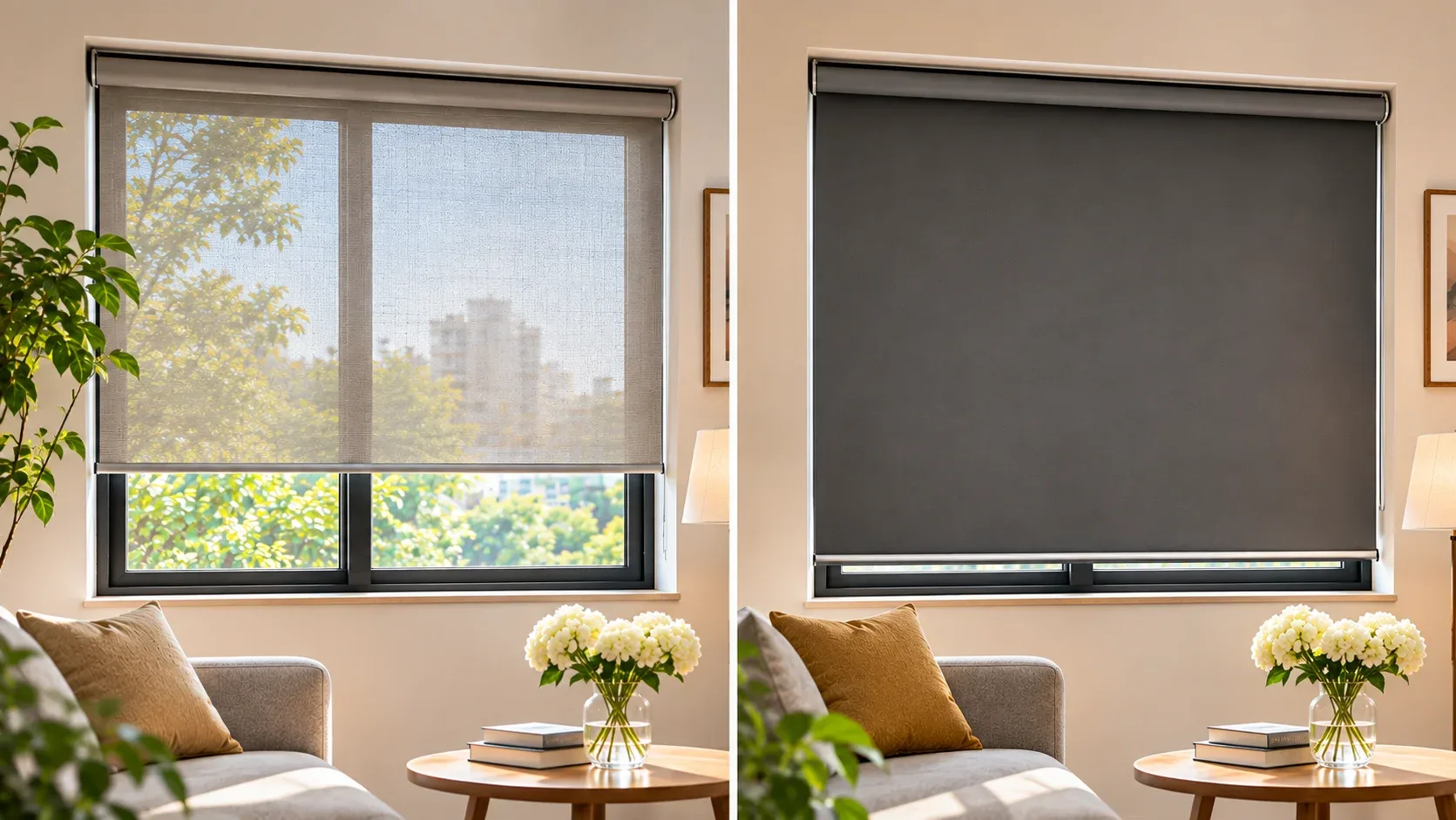
Feature | Screen roller blind | Blackout roller blind |
|---|---|---|
Daylight | Filters incoming light | Blocks light through the fabric |
Outside view | Partly retained | Obstructed when closed |
Daytime privacy | Depends on openness and lighting | Strong visual privacy |
Nighttime privacy | Limited when interior lights are on | Stronger visual privacy |
Glare | Reduces harsh glare | Blocks direct light |
Best suited to | Living rooms and home offices | Bedrooms and media rooms |
Main limitation | Limited privacy at night | Possible light gaps around edges |
Choose screen fabric if daylight and outdoor views matter most. Choose blackout if you need greater darkness and visual privacy.
How Does a Screen Roller Blind Work?
Screen roller blinds use woven fabric with small openings that allow some light to pass through.
The size and frequency of these openings affect how much daylight enters and how clearly you can see outside.
This is described as the fabric's openness factor.
What Do 1%, 3% and 5% Screen Openness Mean?
Openness | Typical result | Suitable starting point |
|---|---|---|
1% | Tighter weave, less view-through, stronger glare reduction | Bright west-facing windows |
3% | Balance between filtered daylight and outside view | Living rooms and workspaces |
5% | More open weave and clearer outside view | Rooms where maintaining the view matters most |
A lower openness percentage generally provides greater visual screening during the day.
However, openness alone doesn't determine how much heat a fabric rejects. Colour, material, solar performance and the glazing itself also matter.
Hello Sun's roller blind collection includes screen and blackout options. Confirm the available openness percentages and fabric specifications during consultation.
Does the Colour of a Screen Blind Matter?
Yes. Two screen fabrics with the same openness may look different against the same window.
A darker screen often gives a clearer outward view in daylight. A lighter screen may reflect more incoming light, but its appearance and glare control depend on the material.
If your desk faces a bright west-facing window, compare both light and dark samples before choosing. A small swatch can look different when it covers the full window.
Will a Screen Roller Blind Give Privacy at Night?
Screen blinds don't provide reliable nighttime privacy.
During the day, brighter outdoor light often makes it harder to see into the room. After sunset, the situation changes when your interior lights are switched on.
People in nearby buildings may then see silhouettes or parts of your room through the fabric.
This matters in Dhaka apartments where windows face neighbouring balconies or residential towers.
For a bedroom or another room that requires evening privacy, consider an opaque blind or an additional curtain layer.
How Does a Blackout Roller Blind Work?
Blackout roller blinds use opaque fabric that prevents light from passing directly through the material.
They're useful in bedrooms where early morning sunlight interrupts sleep, and in media rooms where daylight creates reflections.
The finished result also depends on the mounting system.
Why Can Light Still Enter Around a Blackout Blind?
A standard roller blind usually leaves some clearance between the fabric and the surrounding frame.
Light can enter through these gaps, even when the fabric itself is fully opaque.
An outside-recess fitting provides additional overlap around the opening. Compatible side channels and bottom sealing details can reduce light leakage further.
If darkness is especially important, ask how the proposed blind will deal with light around the edges. No installation should be described as completely lightproof without considering the actual window.
You can also explore blackout curtains for another approach to bedroom light control.
Which Roller Blind Is Best for Each Room?
Different rooms place different demands on a window treatment.
Room | Recommended starting point | Reason |
|---|---|---|
Living room | 3% screen | Filters glare while retaining daylight |
Home office | 1% or 3% screen | Helps manage strong light near a desk |
West-facing room | Tighter screen weave | Useful for strong afternoon glare |
Bedroom | Blackout | Greater darkness and privacy |
Media room | Blackout | Reduces daylight-related reflections |
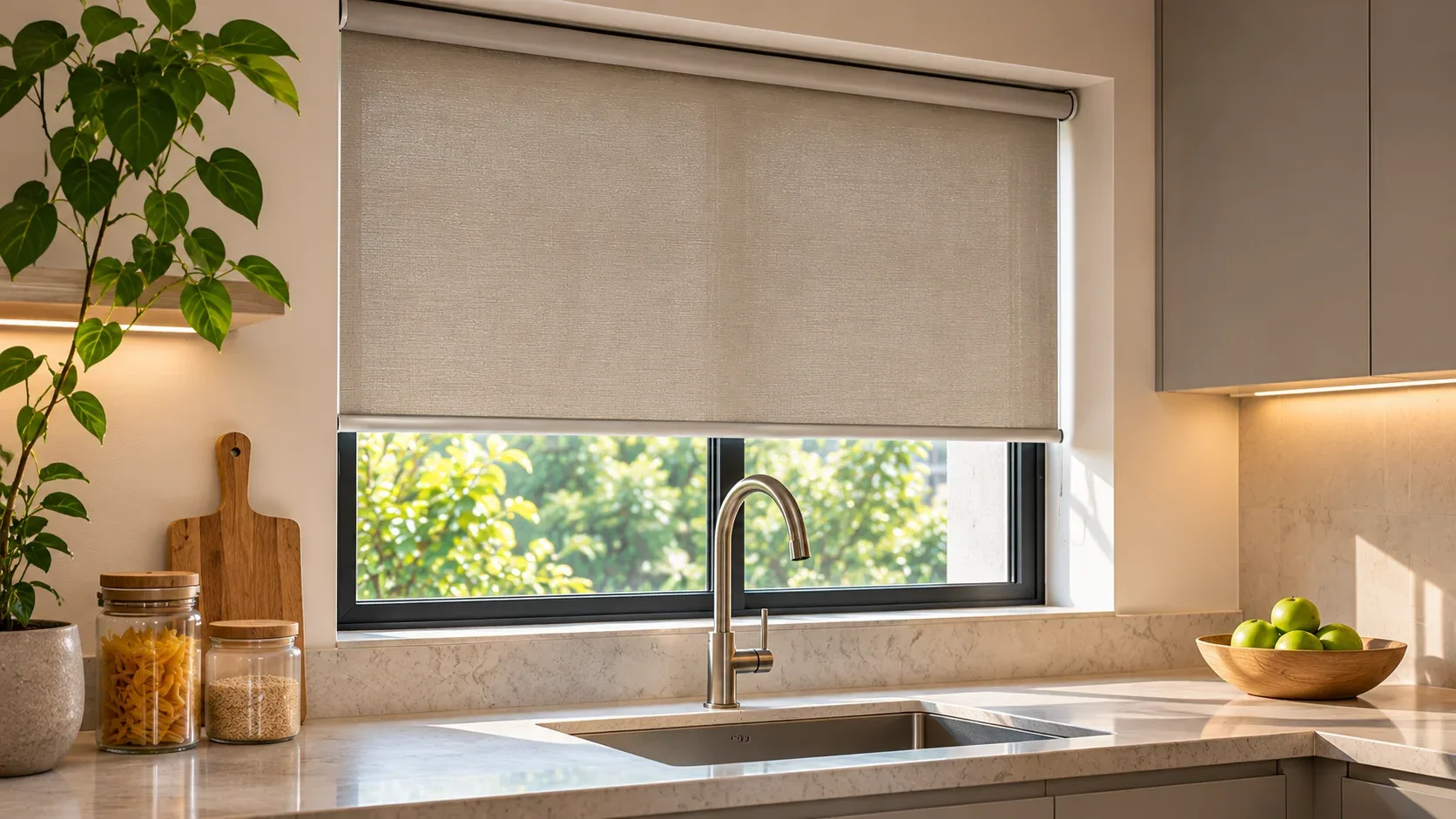
Kitchen | Suitable easy-clean roller fabric | Makes regular maintenance easier |
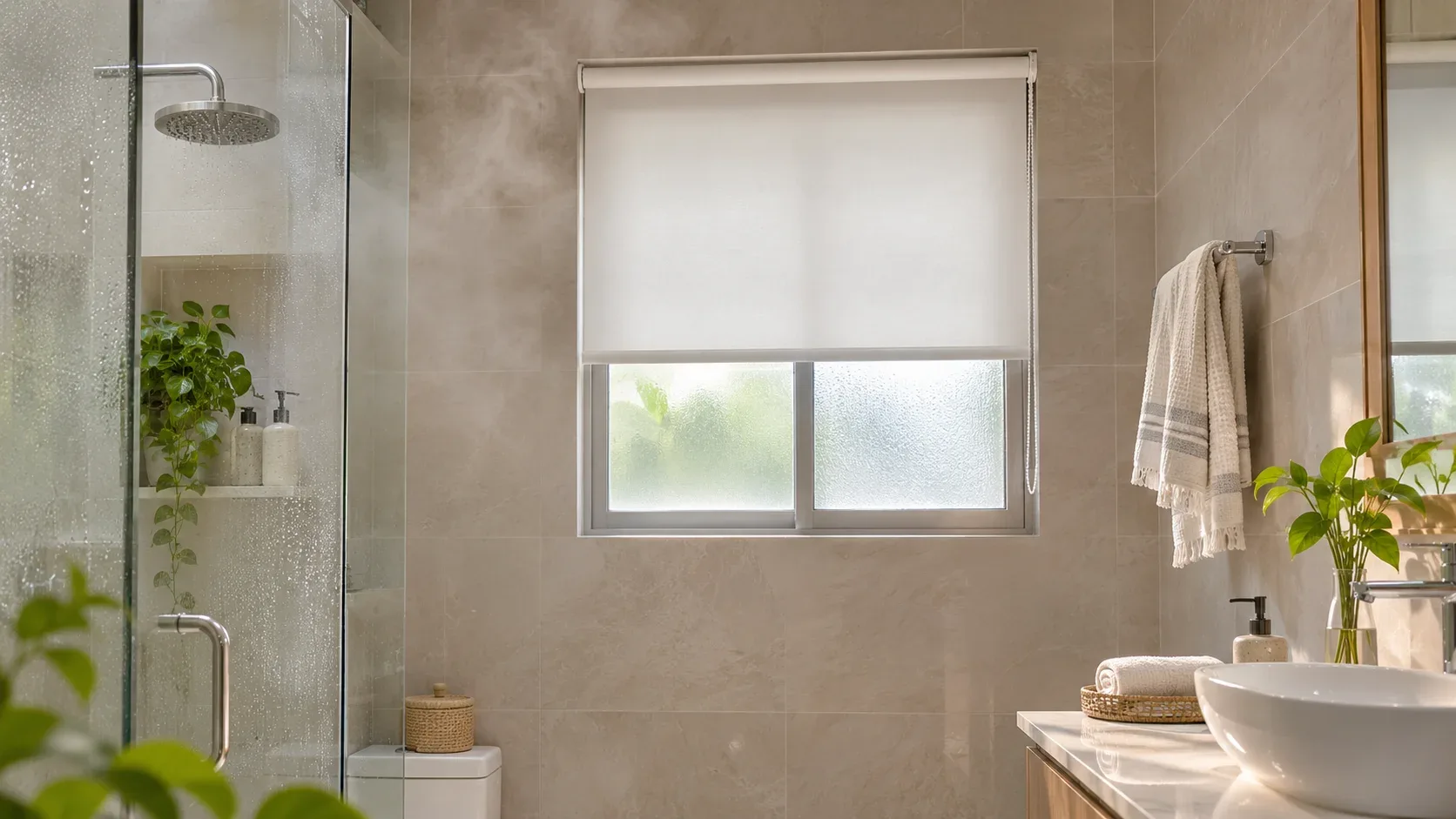
Bathroom | Moisture-suitable roller fabric | Material and fittings must suit humidity |
A west-facing room may need stronger glare control, but a darker or tighter screen isn't automatically the best choice.
The room's lighting, furniture arrangement, and external view all influence the result.
For bedrooms that double as daytime workspaces, consider whether one blind can meet both needs or whether an additional curtain layer would be more practical.
Inside-Recess or Outside-Recess Roller Blinds?
The mounting position affects both appearance and light control.
Inside-recess fitting
The blind sits within the window opening.
This can provide a clean finish where the recess has enough depth. However, the system requires clearance, and gaps may remain along the fabric edges.
Window handles, grills, and uneven surfaces can affect the fitting.
Outside-recess fitting
The blind is mounted above or in front of the window opening.
This allows fabric overlap around the frame and can improve room darkening.
It's often worth considering for blackout applications, although the final result depends on the dimensions and hardware.
Hello Sun technicians measure windows on site before confirming a suitable installation method.
Manual or Motorised Roller Blinds?
Manual roller blinds are practical for everyday windows within easy reach.
For high windows or glazing behind furniture, motorisation may offer greater convenience.
Hello Sun's roller blind collection includes manual controls and selected Somfy motorised systems. Compatibility depends on the size, weight and selected blind configuration.
If your room also has curtains, discuss both treatments together so they can be fitted without interfering with one another.
How Hello Sun Helps You Choose
A roller blind consultation begins with how you use each room.
For a living room, the discussion may focus on glare and outside views. For a bedroom, privacy and darkness may matter more.
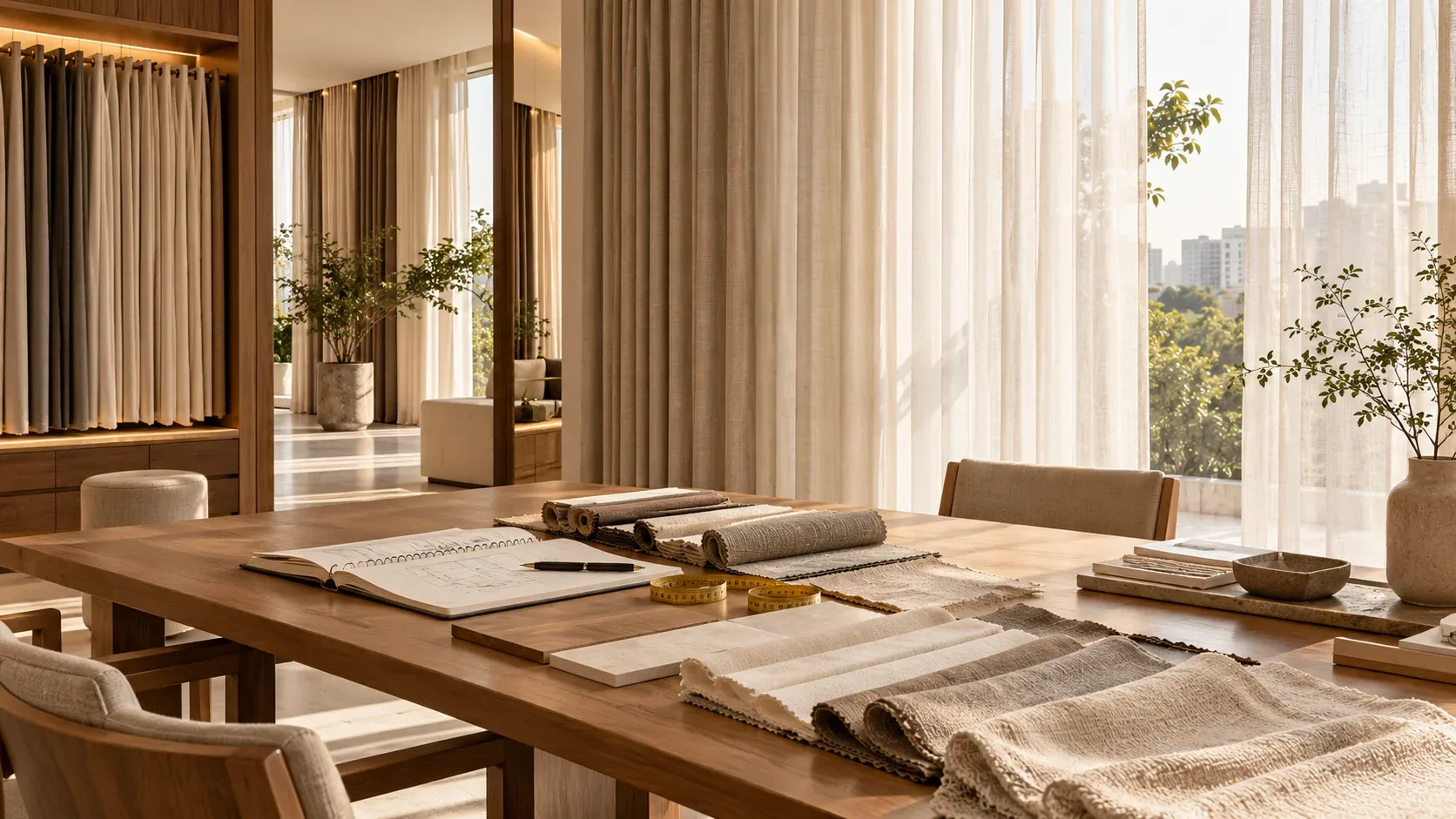
You can compare suitable screen and blackout fabric samples before selecting the system.
Hello Sun technicians then measure the windows on site, checking the recess, nearby grills, handles and fixing positions.
Once the proposed fabric and hardware are approved, the blinds are made to the confirmed specifications and professionally installed.
Explore Hello Sun's completed projects for examples of its window-treatment work.
If heat is your main concern, our guide to thermal curtains for Dhaka heat discusses another approach.
Before You Choose
Start with the room rather than the fabric.
For daytime living areas, a screen roller blind often offers a useful balance of light and visibility. For bedrooms, blackout fabric is generally the stronger choice.
The right fitting arrangement matters as much as the material.
To compare fabrics and discuss suitable options for your windows, contact Hello Sun.